
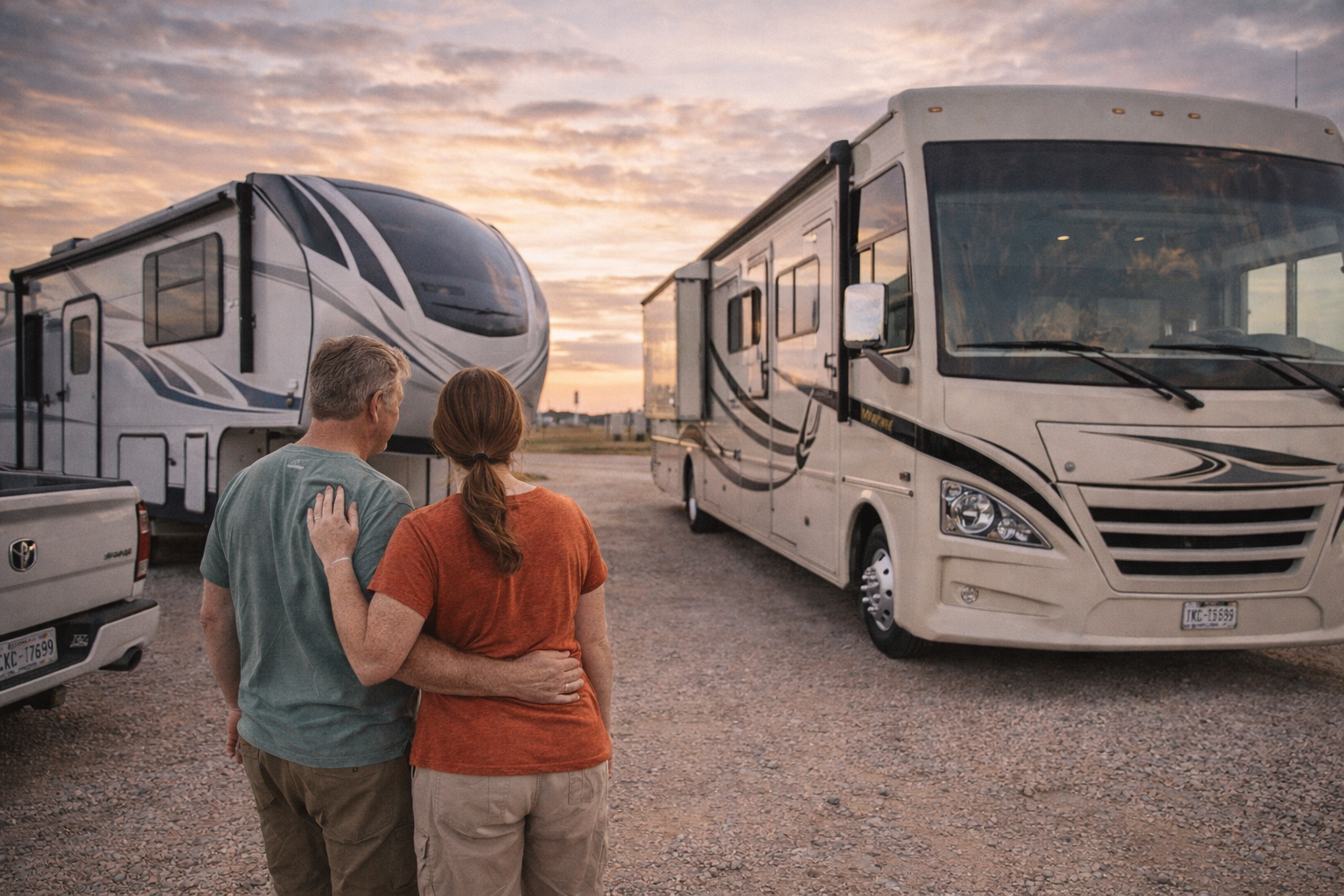
Choosing an RV for a weekend getaway is one thing. Choosing one for long-term travel? That’s a whole different conversation.
When you’re planning to live on the road for months — or even years — every decision feels heavier. Floorplans matter. Storage matters. Even little things you wouldn’t think twice about on a short trip suddenly become daily realities.
If you’re considering full-time RV living in Kansas, this guide is here to help you think it through in a practical, no-pressure way. Not salesy. Not overly technical. Just honest advice from the perspective of how RVs actually get used over time.
Start With Your Version of the RV Lifestyle
Before looking at models, ask yourself one simple question: How do I actually want to live?
Some people imagine constant movement. Others picture staying in one place for weeks at a time, especially in affordable, comfortable areas like Kansas.
Your answer shapes everything about choosing an RV lifestyle:
- How often you’ll drive
- How much space you need
- How important storage and comfort are
If you’re planning to spend extended time at places like a quiet RV park near Arkansas City, comfort and livability will matter more than sleek looks or towing convenience.
RV Size for Long-Term Travel: Bigger Isn’t Always Better
It’s tempting to think bigger automatically means better. Sometimes it does. Sometimes… not so much.
Smaller RVs (Under 30 Feet)
Pros:
- Easier to drive and park
- Lower fuel costs
- Less intimidating for new RVers
Cons:
- Limited storage
- Tighter living spaces
- Can feel cramped over time
Mid-Size RVs (30–35 Feet)
This range often hits the sweet spot for long-term travel.
You usually get:
- Separate living and sleeping areas
- Better kitchen space
- More storage
Many people living the full-time RV Kansas lifestyle end up happiest here.
Larger RVs (35+ Feet)
Pros:
- Residential feel
- More storage
- Space for work setups
Cons:
- Harder to maneuver
- Fewer campground options
- Higher costs
If you plan to settle in for longer stays at a well-equipped Wichita RV park, a larger RV can work beautifully. But mobility does take a hit.
Motorhome or Towable? Be Honest About Comfort Levels
This is where personal comfort really matters.
Motorhomes are great if you want everything in one unit. Towables (travel trailers or fifth wheels) offer flexibility, especially if you want a separate vehicle to explore town.
For long-term stays, many RVers prefer towables because:
- You can unhitch and drive locally
- Maintenance is often simpler
- You get more living space for the price
That flexibility is especially useful if you’re staying in one area for a while and want easy access to groceries, parks, and nearby towns.
Floorplans Matter More Than Brand Names
When it comes to the best RV for long-term travel, layout beats brand every time.
Pay attention to:
- Kitchen counter space
- Bathroom layout (walk-in showers matter more than you think)
- Seating that’s actually comfortable
- Dedicated sleeping areas
Slide-outs can be a game changer, but only if you’re okay with the trade-offs. More space, yes. More things to maintain, also yes.
Storage: The Make-or-Break Factor
Long-term RV travel means carrying more stuff. Clothes for different seasons. Tools. Hobbies. Work gear.
Look for:
- Exterior pass-through storage
- Pantry space
- Closet depth
If you’re planning extended stays in Kansas, where seasons actually change, storage becomes non-negotiable. There’s nothing fun about digging for winter gear when it’s buried under summer stuff.
Weather Considerations for Kansas RV Living
Kansas weather keeps things interesting. Hot summers, cold winters, windy days in between.
For full-time RV Kansas living, look for:
- Good insulation
- Dual-pane windows if possible
- Strong roof construction
- Reliable heating and cooling systems
Not every RV is built for year-round comfort. Choosing wisely here saves a lot of frustration later.
Best RV Models for Long-Term Use (Generally Speaking)
There’s no single “best” model, but certain styles tend to work better.
Popular long-term options include:
- Fifth wheels with residential layouts
- Travel trailers designed for extended stays
- Class A motorhomes with ample storage
When researching best RV models for long-term living, focus less on trends and more on how people actually live in them over time.
Reviews from full-time RVers are gold. Pay attention to complaints that show up repeatedly.
Budget for the RV and the Lifestyle
The RV is just one part of the cost.
Long-term travel includes:
- Maintenance
- Campground fees
- Utilities
- Insurance
Kansas is popular for long-term RV living because it’s affordable and welcoming. Many RVers choose to spend extended time at well-managed parks like Wichita RV Park, where monthly stays make financial sense.
Planning for the full picture helps you avoid surprises.
Test Before You Commit
If possible, rent a similar RV before buying. Live in it for a week. Cook meals. Work inside. Use the bathroom at 2 a.m.
You’ll notice things quickly:
- What feels cramped
- What annoys you
- What you actually love
That real-world experience is worth more than any showroom walk-through.
Common Mistakes to Avoid
A few pitfalls show up again and again:
- Buying too big, too fast
- Ignoring storage needs
- Underestimating weather impact
- Choosing style over function
Slow down. Ask questions. Walk away if something doesn’t feel right. There will always be another RV.
FAQs: Choosing the Right RV for Long-Term Travel
What is the best RV for long-term travel?
The best RV is one that fits your lifestyle, storage needs, and comfort preferences. Mid-size fifth wheels and travel trailers are popular for full-time use.
Is Kansas a good state for full-time RV living?
Yes. Kansas offers affordable RV parks, changing seasons, and easy travel routes, making it ideal for long-term stays.
What RV size is best for long-term travel?
Many long-term RVers prefer 30–35 feet for a balance of space and mobility, but it depends on your comfort level.
Should I choose a motorhome or a towable?
Towables offer flexibility for local travel, while motorhomes provide convenience. Both can work for long-term living.
Do I need a special RV for winter in Kansas?
Look for good insulation, reliable heating, and weather-resistant construction if you plan to stay year-round.
Final Thoughts
Choosing the right RV for long-term travel isn’t about finding the “perfect” rig. It’s about finding one that fits how you want to live.
Kansas offers a comfortable, affordable environment for easing into full-time RV life. Whether you’re planning to move around or settle into a steady routine near Wichita, the right RV makes all the difference.
Take your time. Ask real questions. And trust your gut — it’s usually right, even when the sales pitch sounds tempting.