
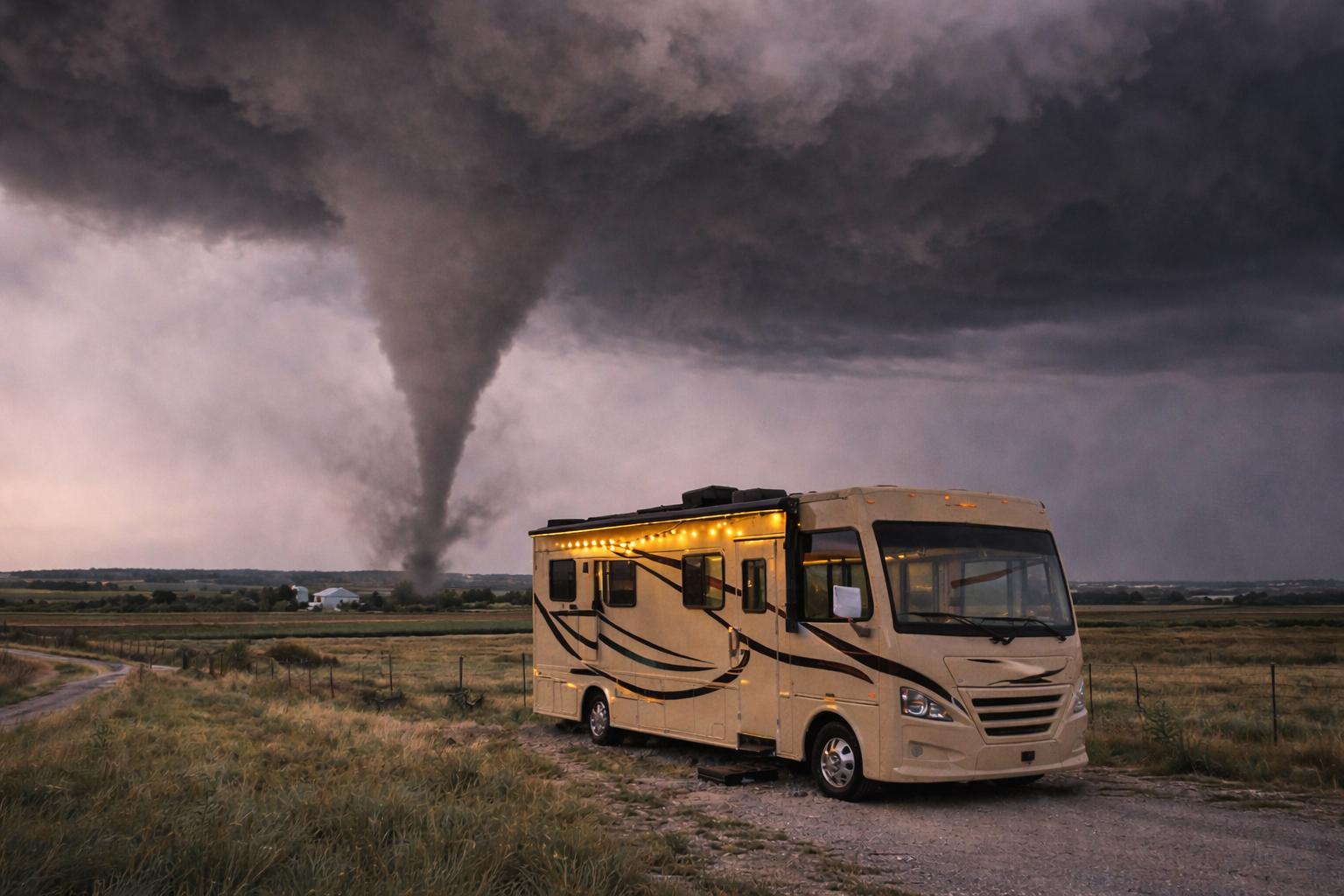
If you’ve never experienced tornado season in Kansas, it can sound intimidating. Sirens, weather alerts, dramatic radar maps, the whole thing. And if you’re traveling by RV, it’s natural to wonder whether it’s even a good idea to be there during that time.
Here’s the honest truth. RVing through tornado season in Kansas isn’t reckless, and it’s not uncommon. Plenty of RVers do it every year. But it does require a different mindset, a little more awareness, and some solid preparation.
This guide walks through what Kansas severe weather RV travel actually feels like, what to expect day to day, and how to prepare in a way that keeps you calm instead of constantly on edge.
Understanding Tornado Season in Kansas
Tornado season in Kansas typically runs from late spring into early summer, with peak activity often between April and June. That doesn’t mean tornadoes are constant. Most days are completely normal.
What is common during Midwest RV weather prep season:
- Rapid weather changes
- Strong thunderstorms
- High winds and hail
- Occasional tornado watches or warnings
The key difference in Kansas is how seriously weather is monitored and communicated. People pay attention here. That helps RVers a lot.
What Tornado Season Actually Feels Like Day to Day
This part surprises many first-time visitors.
Most days during tornado season feel… ordinary. Sunny mornings. Warm afternoons. Calm evenings. The weather only feels intense when conditions line up, and when they do, you’ll usually have advance notice.
Instead of constant fear, RVers experience:
- Checking the forecast more often
- Watching the sky for changes
- Being ready to adjust plans
It becomes part of the routine, not a source of panic.
Staying at an established location like Wichita RV Park helps because parks in this region are used to severe weather and have protocols in place.
The Difference Between a Watch and a Warning (This Matters)
One of the most important tornado season RV tips is understanding alerts.
A tornado watch means:
- Conditions are favorable
- Stay alert
- No immediate danger
A tornado warning means:
- A tornado has been spotted or indicated
- Take shelter immediately
Many RVers panic during watches. Locals don’t. Warnings are when you act.
Knowing the difference reduces stress dramatically.
RV Tornado Safety Starts With Where You Park
Your RV park choice matters more during severe weather season.
Look for parks that:
- Have a storm shelter or designated safe area
- Provide clear communication during weather events
- Are in established communities, not isolated land
Parks near towns, like RV park near Winfield, often have better access to public shelters and emergency services.
Ask about storm procedures when you check in. Good parks are happy to explain them.
What RV Parks Actually Do During Severe Weather
Many RVers imagine chaos when storms roll in. In reality, well-run parks are organized.
During severe weather:
- Staff monitor weather alerts
- Guests are notified if action is needed
- Shelters or safe areas are opened
Storm safety RV park procedures are usually calm and direct. You’re rarely figuring things out alone.
This is one reason RV emergency planning works better in community settings than isolated camping during tornado season.
How to Prepare Your RV Before Storms Hit
Preparation doesn’t mean battening down like a bunker. It means reducing risks.
Before storms:
- Retract awnings
- Secure outdoor furniture
- Close windows and vents
- Park with the RV oriented into prevailing winds if possible
These steps help with wind and debris, which are more common than tornadoes themselves.
Most storm damage comes from straight-line winds and hail, not tornado touchdowns.
Where to Go If a Tornado Warning Is Issued
This is the most important part of RV tornado safety in Kansas.
Do not stay inside your RV during a tornado warning.
Instead:
- Go to a designated storm shelter
- Use park-provided safe buildings
- If none are available, seek a sturdy structure nearby
If absolutely no shelter exists, the safest last-resort option is a low-lying ditch away from vehicles, covering your head. It’s not ideal, but it’s safer than remaining inside an RV.
Knowing this ahead of time reduces panic when seconds matter.
RV Emergency Planning That Actually Works
Good RV emergency planning isn’t complicated.
Have:
- A weather app with alerts enabled
- A basic emergency kit (flashlight, shoes, water)
- A plan for where to go at your park
Keep shoes accessible at night. This sounds small, but broken glass and debris are common after storms.
I learned that tip from a local. Didn’t think about it before, but yeah… it makes sense.
Weather Apps Are Your Best Friend
Relying on sirens alone isn’t enough.
Use:
- NOAA weather alerts
- Local radar apps
- Push notifications
Midwest storms can develop quickly. Apps give you lead time to prepare calmly instead of reacting late.
Checking radar becomes second nature after a few days.
How RVers Mentally Adjust to Tornado Season
This part is underrated.
The first few alerts feel intense. After that, you learn the rhythm. You notice patterns. You understand when to be concerned and when to relax.
Kansas severe weather RV travel becomes less scary once you realize:
- Most storms don’t produce tornadoes
- Warnings are targeted and specific
- Preparation reduces risk significantly
Fear comes from uncertainty. Knowledge replaces it.
Driving During Severe Weather Days
You don’t always need to change travel plans, but sometimes you should.
On severe weather days:
- Avoid driving during peak storm hours
- Plan earlier departures
- Be willing to stay put if conditions worsen
Hail and high winds pose more risk to RVs than tornadoes during travel. Waiting a few hours can make a big difference.
Flexible schedules are a huge advantage here.
Why Many RVers Still Travel Kansas During Tornado Season
This surprises people.
Kansas during tornado season also offers:
- Lush landscapes
- Fewer crowds
- Pleasant temperatures between storms
Many RVers prefer it over hotter summer months. As long as you’re prepared, the benefits often outweigh the risks.
That’s why parks like Wichita RV Park remain busy even during peak storm months.
Common Mistakes RVers Make During Tornado Season
A few patterns show up:
- Ignoring forecasts completely
- Overreacting to watches
- Not knowing where shelters are
- Leaving awnings out “just for a bit”
Preparation is about balance, not extremes.
What Tornado Season Teaches RVers
RVing through tornado season tends to make people more weather-aware overall.
You become:
- Better at reading forecasts
- More flexible with plans
- Less reactive and more intentional
Those skills carry over to other regions too.
FAQs About RVing Through Tornado Season in Kansas
Is it safe to RV in Kansas during tornado season?
Yes, with proper awareness and preparation.
Should I avoid Kansas altogether during tornado season?
Not necessary. Many RVers travel through without issues.
Do RV parks provide tornado shelters?
Many do, or they coordinate with nearby facilities.
What’s the biggest risk to RVs during storms?
High winds and hail are more common risks than tornadoes.
Can tornadoes happen at night?
Yes. Nighttime warnings are possible, which is why alerts and preparation matter.
Final Thoughts
RVing through tornado season in Kansas isn’t about being fearless. It’s about being informed.
When you understand how weather alerts work, know your shelter options, and prepare your RV properly, the experience becomes manageable instead of stressful.
Most days are calm. Some days require attention. Very few days require action. And when they do, being prepared makes all the difference.
Kansas doesn’t ask RVers to avoid it during storm season. It just asks them to pay attention. Do that, and you’ll find that tornado season is far less scary than it sounds, and a lot more predictable than people think.