
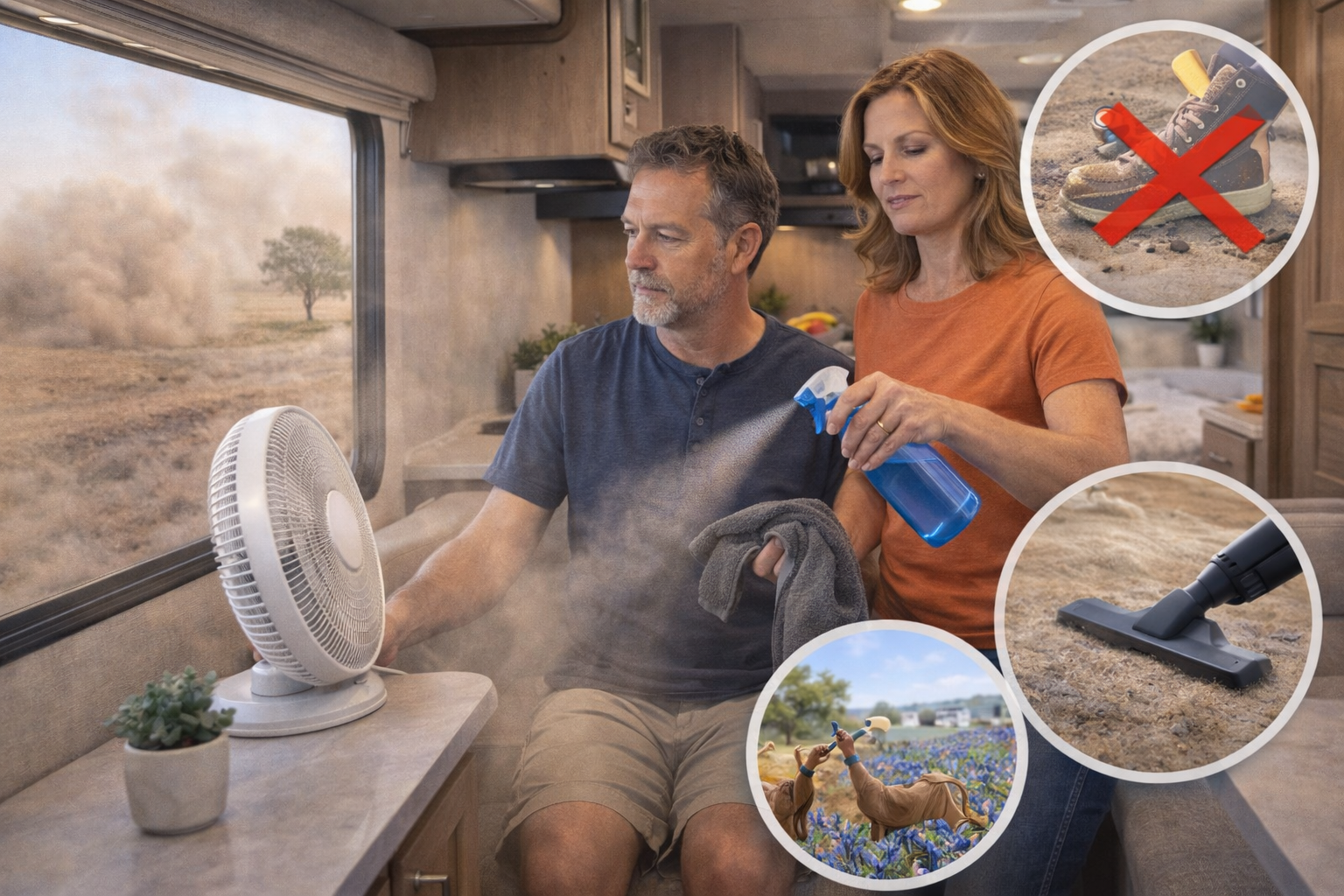
If you’ve spent even one spring or late summer in Kansas, you already know.
The wind kicks up.
The fields dry out.
And somehow… the dust finds its way inside your RV.
You sweep. You wipe. You swear you just cleaned yesterday. And still, there’s a thin layer of prairie powder on your counter.
Dry Kansas months are beautiful in their own way. Big skies. Open space. Warm days. But they come with one unavoidable reality:
Dust.
The good news? You don’t have to live in a constant haze. With a few practical RV dust control Kansas strategies, you can keep your rig cleaner and more comfortable — even during the windiest stretches.
Let’s talk about what actually works.
Why Kansas Dust Is So Persistent
Kansas isn’t just dry. It’s windy and dry.
That combination matters.
When soil dries out, it becomes light and fine. Add prairie wind, and you’ve got airborne dust that can travel far — across fields, roads, and straight into your campsite.
If you’re parked for an extended stay, dust builds up gradually. It’s not dramatic at first. Just a little on the windowsill. A bit on the dashboard.
Then suddenly… it’s everywhere.
Understanding that dust prevention RV park setups require proactive habits is the first step.
Start With the Exterior: Stop It Before It Enters
You can’t control the wind. But you can control how much dust enters your RV.
One of the best RV cleaning tips Midwest travelers rely on is managing your entry point.
Use Outdoor Mats (Two, If You Can)
Place:
- One heavy-duty mat outside your RV door
- One washable rug just inside
Encourage everyone to wipe their feet thoroughly.
It sounds simple. It works.
Dust prevention RV park strategies often start right at the steps.
Create a “Shoes Off” Rule
I know. Not everyone loves this.
But during dry weather RV maintenance months, it’s a game changer.
Shoes track in:
- Dirt
- Fine gravel
- Field dust
Keep a small shoe rack or bin by the door. It prevents half your cleaning problems before they begin.
Extended stay RV cleaning becomes easier when the outside stays… outside.
Seal Small Gaps and Weather Stripping
Dust doesn’t just come in through doors.
It sneaks in through:
- Slide-out seals
- Storage compartment edges
- Door weather stripping
- Utility hookups
Inspect your seals.
If you see cracking or gaps, replace the stripping.
Kansas RV care during dry months means checking areas you usually ignore.
Even tiny gaps invite a steady stream of fine dust.
Manage Your Windows Wisely
Fresh air feels great.
But during windy afternoons, open windows can turn your RV into a dust collector.
A few tips:
- Open windows early morning or evening when winds are calmer
- Use vent covers that block debris
- Avoid leaving windows cracked on gusty days
Dry weather RV maintenance includes knowing when to keep things closed.
Upgrade Your Air Filters
Your RV’s HVAC system circulates air constantly.
If the filter is dirty or low-quality, dust spreads instead of being captured.
Check and replace filters regularly — especially during high-dust months.
High-quality filters significantly improve RV dust control Kansas residents depend on.
Clean air inside makes a noticeable difference.
Vacuum Frequently (But Strategically)
You don’t need to vacuum daily.
But high-traffic areas? Yes.
Focus on:
- Entryways
- Under dining tables
- Sofa areas
- Bedroom foot areas
Use a vacuum with a HEPA filter if possible.
It traps fine particles instead of blowing them back out.
Extended stay RV cleaning isn’t about constant deep cleans — it’s about consistent light maintenance.
Wipe Surfaces With Damp Cloths
Dry dusting often just moves particles around.
Instead:
- Use microfiber cloths
- Slightly dampen them
- Wipe slowly and thoroughly
Counters, dashboards, window ledges — they all collect that fine Kansas powder.
RV cleaning tips Midwest travelers swear by usually include microfiber.
It grabs dust instead of chasing it.
Rinse the Exterior Regularly
Dust buildup outside eventually finds its way inside.
If your park allows it, occasionally rinse:
- The steps
- Lower panels
- Wheel wells
- Entry door frame
If you’re staying somewhere well-maintained, like Wichita RV Park, you’ll likely appreciate paved or stabilized surfaces that help reduce dust compared to bare dirt lots.
Location matters.
Consider a Portable Air Purifier
For long-term stays, a compact air purifier can help.
Especially during peak dry periods.
It won’t eliminate all dust. But it reduces airborne particles inside your living space.
Kansas RV care isn’t just about visible dust — it’s about air quality too.
Use Rugs to Trap Dust (Not Spread It)
Bare floors show dust immediately.
Strategic rug placement:
- Entry rug
- Hallway runner
- Living area rug
Shake them out regularly outside (on calm days).
They act like filters for your floor.
Without them, dust travels freely.
Manage Outdoor Setup Carefully
Chairs, tables, and gear placed outside collect dust.
Before bringing anything inside:
- Shake it off
- Wipe it down
- Let it air out
Dust prevention RV park habits extend beyond your interior.
Control your outdoor-to-indoor flow.
Choose Smart Parking When Possible
Where you park within a campground can influence dust exposure.
Spots closer to:
- Gravel roads
- Open fields
- Construction zones
Will see more dust.
If you’re exploring options like an RV park near Valley Center or other Wichita-area locations, look for parks with stabilized surfaces and thoughtful layouts.
Paved roads and maintained lots make a difference.
Keep Storage Compartments Organized
Dust sneaks into compartments too.
Keep bins sealed. Use plastic storage containers instead of open boxes.
Dry weather RV maintenance includes checking outside storage regularly.
You don’t want to open a compartment and find everything coated.
Adjust Cleaning Expectations
Here’s the honest part.
During dry Kansas months, you won’t eliminate dust entirely.
And that’s okay.
The goal isn’t perfection.
It’s management.
If you’re doing small daily resets — quick sweep, quick wipe — it never gets overwhelming.
Extended stay RV cleaning works best when it’s part of your routine.
Protect Upholstery and Bedding
Dust settles on fabrics quickly.
During peak dusty weeks:
- Keep beds made
- Use washable throws
- Shake out blankets weekly
- Vacuum upholstery occasionally
It keeps that gritty feeling away.
Comfort matters.
Watch the Weather
High-wind days are predictable.
If you know a windy afternoon is coming:
- Close windows
- Secure vents
- Delay deep cleaning until after
There’s no point cleaning thoroughly right before a gusty day.
Time your efforts wisely.
Build a Weekly Dust Routine
Here’s a simple structure:
Daily (5–10 minutes):
- Sweep entry area
- Quick counter wipe
Twice Weekly:
- Vacuum high-traffic spots
- Dust surfaces with damp cloth
Weekly:
- Shake rugs
- Clean windows
- Check seals
Kansas RV care becomes manageable when broken into small tasks.
Don’t Forget the Tow Vehicle
Your truck or toad collects dust too.
Clean dashboards and floor mats regularly.
Otherwise, you’re reintroducing dirt every time you drive.
RV dust control Kansas routines should include everything attached to your travel setup.
Final Thoughts
Dry Kansas months are part of the landscape.
The wind will blow.
The dust will move.
The fields will dry out.
But that doesn’t mean your RV has to feel gritty and uncomfortable.
With smart dust prevention RV park habits, regular light cleaning, and proactive maintenance, you can stay ahead of it.
RV cleaning tips Midwest travelers rely on aren’t complicated.
They’re consistent.
Keep dirt outside.
Seal small gaps.
Use rugs wisely.
Clean lightly, often.
And instead of fighting the Kansas wind, you’ll just… manage it.
That’s good enough.
FAQs About RV Dust Control in Kansas
How do I reduce dust inside my RV during dry months?
Use outdoor and indoor mats, seal gaps, vacuum regularly, and keep windows closed on windy days.
Is RV dust control Kansas-specific?
Dry, windy regions like Kansas require more proactive dust prevention compared to humid climates.
How often should I clean during extended stays?
Light daily cleaning and a weekly deeper reset help prevent buildup.
Do air purifiers help in RVs?
Yes. Compact air purifiers can reduce airborne dust and improve indoor air quality.
What’s the biggest dust mistake RVers make?
Ignoring small entry habits — like wiping shoes and sealing door gaps — which allow most dust inside.