
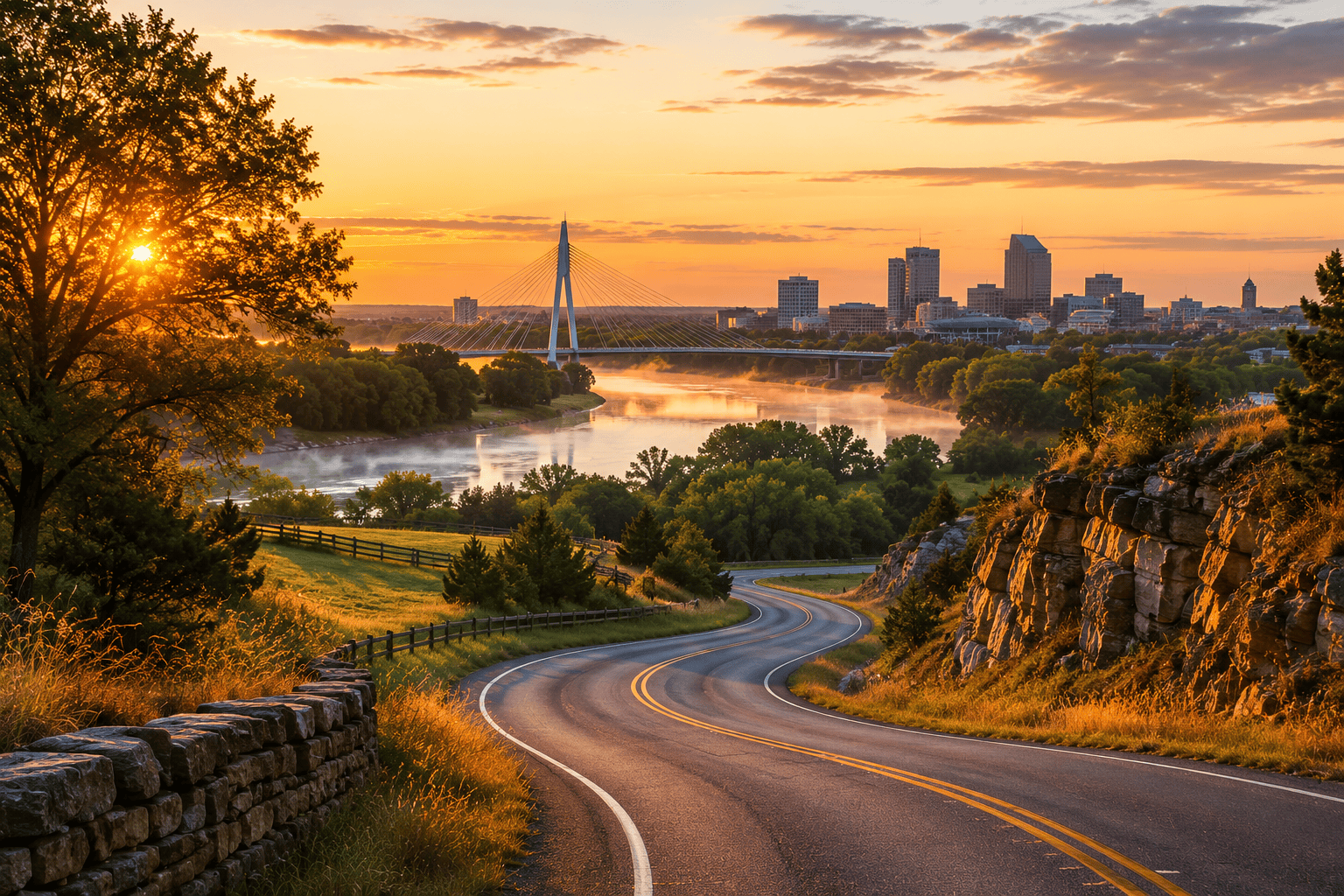
People write off Kansas as flat. Drive through it once on I-70 at 75 miles an hour and you file it under “place you passed through” and don’t think about it much. That’s a reasonable response to the interstate. It’s a bad one to the actual landscape, which reveals itself slowly and only when you’re on the roads that weren’t designed for passing through as fast as possible.
Early morning is when Kansas countryside driving pays off most reliably. The light across flat farmland and river bottoms at sunrise is genuinely something. The particular quality of a Great Plains morning — low light raking across grain stubble, fog sitting in the creek drainages, pheasants and meadowlarks doing their morning business at the roadside — doesn’t register at 65mph. It registers when you’re on a county road at 30, with a thermos of coffee and nowhere specific to be.
Wichita is a better base for this kind of driving than most travelers realize. The city sits at the intersection of several genuinely interesting landscape types, and the county road networks in every direction deliver the kind of quiet morning driving that people who love it come back for year after year. Here’s where to go.
West Toward Cheney: Prairie at Its Most Honest
Drive west from Wichita on US-54 for about ten miles and then take county roads south and west toward Cheney Reservoir, and you’re in short-grass prairie country that looks the way Kansas has looked for a long time. It’s agricultural now — winter wheat, grain sorghum, the occasional feedlot — but the underlying landscape is the same high plains terrain that Wichita Wichita was built on the edge of.
Morning light on flat, open farmland does something specific that’s hard to describe accurately. The low angle throws long shadows across every furrow and fence post and grain elevator. The sky is enormous and active — cloud movement in Kansas at sunrise is a show in itself, particularly in spring when the atmosphere is doing complicated things — and the horizon is far enough away that you can watch a weather system building or clearing from twenty miles out.
The reservoir itself, at full pool, adds a water element to the prairie drive that makes Cheney an especially good morning destination. The western-facing shore in the early light has a particular quiet about it, with shore birds working the margins and the surface of the water catching the orange-pink of the pre-sunrise sky. Get there before the walleye fishermen launch their boats and you have it essentially to yourself.
North on K-96 Toward Halstead and the Arkansas River Bottom
The Arkansas River bottom north of Wichita is one of the more surprisingly beautiful morning drives accessible from the city. Take K-96 north to Halstead — about 25 miles — and then explore the county roads east and west along the river corridor. The Arkansas through this stretch has a cottonwood-lined character that changes dramatically with the seasons: green and shaded in summer, golden in October, bare and structural in winter with the silvery light coming through without obstruction.
Halstead itself is a small Kansas town with a quiet morning character. The main street has the look of a place that peaked several decades ago and found peace with it. There’s usually a diner or a coffee spot open early enough to catch travelers coming through before they head out into the countryside, and the people you meet in those places tend to know things about the local roads and recent wildlife activity that no app will tell you.
The county road network between Halstead and Newton along the river bottom is particularly good for morning birding from the car — meadowlarks and pheasants in the fields, great blue herons and kingfishers at the river crossings, and during migration seasons, mixed flocks of waterfowl moving through the river corridor in numbers that make you pull over without planning to.
The Halstead and Harvey County area guide covers the roads and local character of this corridor in more detail — worth looking through if you’re planning to spend serious time exploring north of the city.
East on K-254 to El Dorado: A Drive With Destination
K-254 east from Wichita to El Dorado covers about 30 miles through transitional terrain — the short-grass prairie of the Wichita metro giving way to the post oak woodland and rolling topography of Butler County. It’s not a dramatic landscape shift, but it’s a noticeable one, and the drive in morning light through the Walnut River valley has a soft, pastoral quality that contrasts nicely with the open prairie drives to the west.
El Dorado Lake at the end of the drive is worth building a morning around. The East Bluff area of El Dorado State Park has elevated views over the lake that work particularly well in the hour after sunrise — the combination of height, open water, and low-angle light creates conditions that photographers specifically seek out and that ordinary travelers just think of as “really nice.” There’s usually a great blue heron or two working the shallows below the bluff, which adds to the appeal considerably.
The town of El Dorado itself has a morning diner culture worth exploring. Look for the spots the locals go rather than the ones near the highway — the same principle that applies to finding good food anywhere applies double in small Kansas towns.
Southeast Through the Flint Hills: The Longest and Most Rewarding Option
This one requires more commitment — a full morning rather than a quick hour — but the Flint Hills southeast of Wichita are the most scenically distinctive landscape in Kansas and one of the genuinely underappreciated landscapes in the country. Take US-77 south out of Wichita toward Winfield and then connect to the back roads that run through the tallgrass prairie remnants east of the highway.
The Flint Hills are rolling, covered in native tallgrass that has never been plowed because the shallow, rocky soil resists the plow, and in the early morning the hills have a character that people who love this landscape describe with a particular intensity. The light plays differently on tall native grasses than on cropland — there’s movement and texture that flat fields don’t have, and the colors shift from gray-green in early morning to gold and amber as the sun rises higher.
Spring is the best season for this drive. Ranchers in the Flint Hills do controlled burns in late March and April — one of the oldest land management practices in the region — and the landscape goes through a dramatic transformation from black burn scar to brilliant new green in the weeks following. Driving through recently burned and newly greening Flint Hills country in April morning light is the kind of visual experience that people who do it once specifically arrange to do again.
Cottonwood Falls and Strong City, at the north end of the Flint Hills, are worth building into a longer Flint Hills morning loop — the Chase County Courthouse in Cottonwood Falls is one of the finest remaining Romanesque Revival stone buildings in Kansas and earns a brief stop even on a drive-focused morning.
The Little Arkansas River Corridor: Quiet and Close
For mornings when you don’t want to drive far, the Little Arkansas River north of downtown Wichita through Valley Center offers a surprisingly peaceful corridor just minutes from the city’s edge. The river here runs through agricultural bottomland with mature cottonwood and willow groves that shelter a diverse bird community — including some of the best accessible shorebird habitat in Sedgwick County during migration.
Valley Center to Sedgwick along the river’s general course is a route that experienced birders know well and that most other travelers have never heard of, which is exactly the condition that makes an early morning drive rewarding. Light traffic, quiet roads, good wildlife, and the particular atmosphere of river bottom farmland in morning fog.
Practical Notes for Morning Drives Around Wichita
- Kansas county roads are generally well-maintained but can be gravel rather than paved — check conditions after significant rain before heading out on unpaved surfaces in a vehicle you care about.
- Wildlife at the roadside is common on rural Kansas roads at dawn. Deer, pheasants, and the occasional coyote cross unexpectedly. Drive at a pace that allows you to stop.
- Gas stations are not universally present on rural county routes. Fill up the night before, particularly for the Flint Hills and Cheney routes where services can be 20 or more miles apart.
- A good thermos matters. Most rural Kansas routes have nothing open before 7am, and starting the drive with coffee you made at the park is genuinely better than hunting for a gas station coffee at 6am.
- Download offline maps before you leave. Cell coverage on rural Kansas county roads is inconsistant enough that relying on real-time navigation is a risk worth avoiding.
The Wichita area visitor and activity guide puts these drives in the context of everything else the region offers — useful for building out a full stay rather than just planning a single morning.
For guests planning a longer base in the area, the long-term stay options at Wichita RV Park make it practical to use the city as a proper base for exploring all of south-central Kansas over an extended period. Short-term visitors can find everything they need on the short-term stay page to get settled quickly and get out on the roads early.
Travelers considering the McPherson corridor as part of a broader Kansas exploration should know that the RV park near McPherson, KS is a well-positioned option for the northern portion of the routes described here — particularly the Flint Hills loop and the river bottom drives north of Wichita.
The park’s amenities and hookup details are covered on the park facilities and amenities page — worth reviewing to make sure your rig is set up well before heading out for an early morning that starts before the sun does.
Come stay at Wichita RV Park, set the alarm for 5:30, and find out what Kansas mornings actually look like. The state has been keeping this particular secret reasonably well. You might as well go see it.
Frequently Asked Questions
What are the best scenic drives near Wichita, KS?
The Flint Hills southeast of Wichita via US-77 are the most scenically distinctive option — native tallgrass prairie on rolling limestone terrain that’s genuinely unlike anywhere else in the country. For a shorter drive, K-254 east to El Dorado Lake offers transitional terrain and excellent lakeside scenery. The county roads west toward Cheney Reservoir deliver classic short-grass prairie and big-sky morning light. The Arkansas River bottom north toward Halstead provides riparian scenery and some of the best roadside birding near the city.
Why are Kansas sunrise drives particularly good?
The flat, open terrain of south-central Kansas creates sunrise conditions that most Americans rarely experience — a full, unobstructed horizon in every direction with nothing blocking the light. Sunrises here spread wide and low across the landscape, throwing long shadows across farmland and river corridors in a way that reveals texture and detail invisible at higher sun angles. The sky is also enormous by most regional standards, which means weather events, cloud formations, and atmospheric color are visible at a scale that more enclosed landscapes simply don’t allow.
What wildlife can I see on morning drives around Wichita?
Ring-necked pheasants at field edges are one of the most characteristically Kansas roadside sights, particularly in agricultural areas north and west of the city. Western meadowlarks — the Kansas state bird — sing from fence posts along most rural routes in spring and summer. Great blue herons and kingfishers work the river crossings along the Arkansas and Little Arkansas corridors. Deer are common at the roadside at dawn. During spring and fall migration, mixed waterfowl flocks move through the river corridors, and shorebirds concentrate on mudflats at the reservoirs when water levels permit.
Are the Flint Hills worth a day trip from Wichita?
Yes, and particularly in April when the controlled burns and new green growth make the landscape most striking. The Flint Hills are the largest remaining tract of native tallgrass prairie in North America and genuinely unlike any other landscape in the region. The drive south from Wichita on US-77 enters the hills within about 45 minutes. Cottonwood Falls and Chase County State Park are natural destinations within the hills. A full Flint Hills morning loop — south on US-77, through the hills on county roads, return via K-177 — takes most of a morning and delivers a complete Kansas landscape experience that most visitors who pass through the state on the interstate never encounter.
What time should I leave for a sunrise drive near Wichita?
Leave about 45 minutes before official sunrise to be positioned where you want to be when the light starts. Sunrise times in Wichita range from around 6am in summer to 7:30am in December, so the specific time shifts with the season. The 20 to 30 minutes before the sun crests the horizon is often the most visually interesting period — the light is already warming the sky and raking across the landscape, but the sun itself hasn’t appeared yet. Arriving at a lake or open prairie vantage point during this pre-sunrise window rather than at sunrise itself is the approach that produces the best visual results.
Are Kansas county roads safe for RVs and large vehicles?
Most Kansas county roads are passable for standard passenger vehicles and many smaller RVs, but larger Class A motorhomes and fifth wheels should stick to state highways and well-marked county roads rather than unmarked rural routes. Gravel surfaces are common on secondary county roads and can be narrow through agricultural crossings and creek bridges. After significant rainfall, some clay-based county roads become extremely slippery. Checking road conditions with the Kansas Department of Transportation before extended rural driving, particularly in spring when frost heaves and seasonal road closures are more common, is a practical precaution for RV travelers.
What is the Flint Hills controlled burn season and what does it look like?
Flint Hills ranchers conduct controlled burns primarily in late March and April, a land management practice that’s been used in this region for centuries to maintain native grass health and control invasive species. The burns produce dramatic visual transformations — the hills go from tan winter grass to black burn scar to brilliant new green within a few weeks. The smoke from active burns can be visible from Wichita on burn days and creates atmospheric haze that produces particularly warm-toned sunrise and sunset light. Driving through newly greening post-burn Flint Hills in April morning light is one of the most visually striking experiences accessible from Wichita on a day trip.