
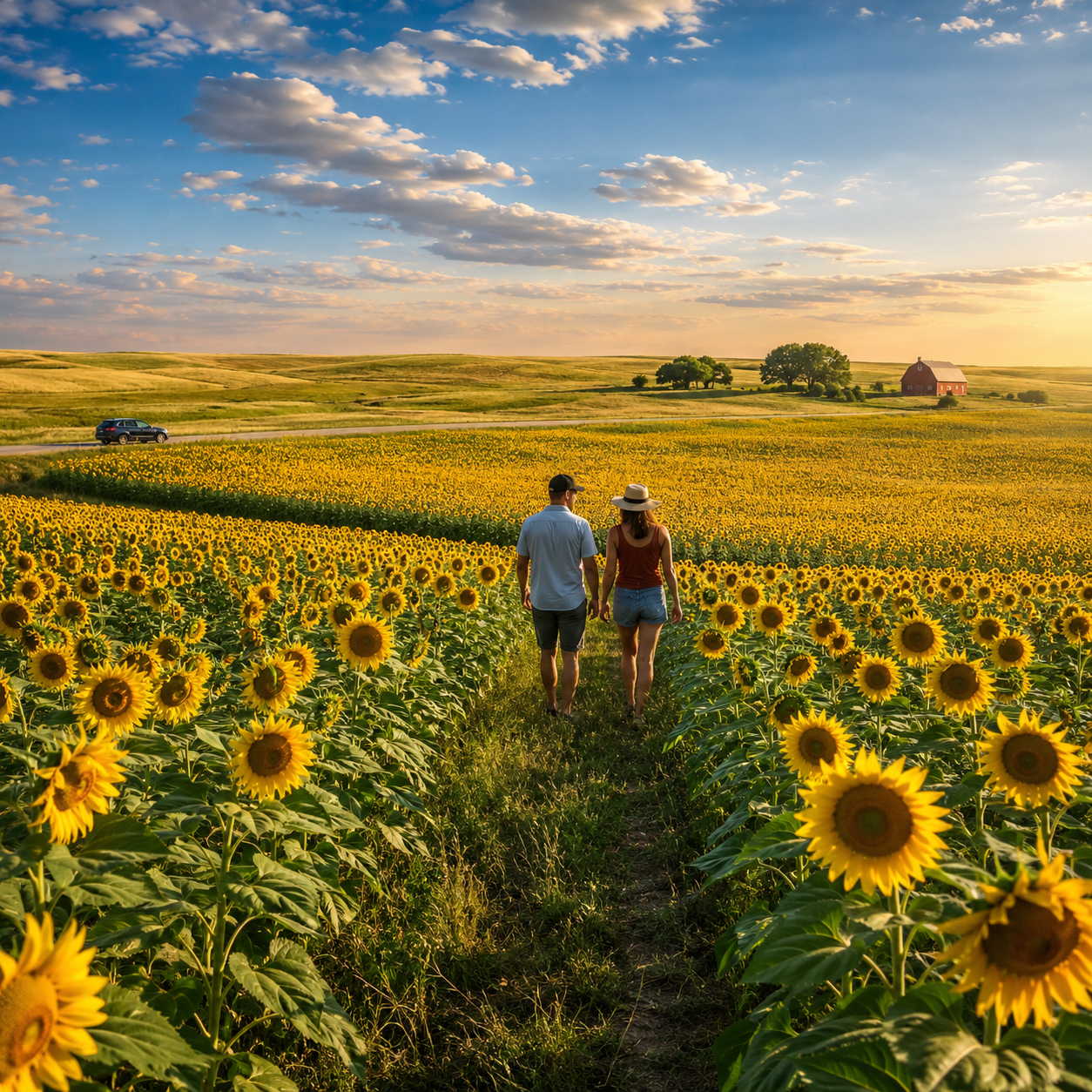
Kansas has been officially tied to the sunflower since 1903, when the wild sunflower became the state flower, and travelers on the Santa Fe Trail were writing about fields of them stretching across the prairie long before that. Late summer is when the state earns that reputation most dramatically — cultivated sunflower fields across the Wichita area burst into bloom, and a short drive from Spring Lake puts you right in the middle of it.
Understanding Kansas Sunflower Bloom Timing
The single most important thing to know before planning a sunflower field visit: each individual field’s bloom window lasts only about 10 to 14 days, and the exact timing shifts from year to year based on planting date and weather. Fields around the Wichita area generally start blooming as early as July, with many peaking through August and some continuing into September, but there’s no single fixed date you can circle on a calendar in advance. Checking a specific farm’s Facebook page in the days before you plan to visit is essential, not optional, since that short bloom window means a field that was stunning last week can be past its peak by the time you arrive without checking first.
“People ask every year if there’s a set date for peak bloom, and the honest answer is it depends on when each farmer planted and what the weather’s done. The reliable pattern is late July through August for most fields around Wichita, but the specific week shifts every single year. Following the actual farm’s page beats any general guide, including this one.”
Sunflower Fields Worth Visiting Near Wichita
PBR Family Farm
About 20 miles east of downtown Wichita, PBR Family Farm’s sunflower field has become a genuine local summer tradition, planted by realtor Diana Burress and her family. There’s no fee to walk through the flowers and take photos, and there’s a bonus attraction on-site: a sunflower mural painted on a silo, giving visitors two photo opportunities in one stop. Blooms are typically expected in late August, though checking the farm’s Facebook page for current-year updates before heading out is the reliable way to time your visit. A designated parking area is available, and visitors should not park along the road.
Cedar Creek Farm
Cedar Creek Farm in Maize has drawn visitors with multiple color varieties planted in the same season — red, white, and yellow sunflower fields have all been part of their offering in recent years, giving photographers a genuinely different look than the classic all-yellow field most people picture. Their bloom timing has run earlier in the season in some years, so checking current status directly is worth doing if you’re specifically hoping to catch the color variety fields.
Kansas Maze at Gaeddert Farms
Kansas Maze, at Gaeddert Farms in Buhler, offers one of the larger sunflower experiences in the area — more than 600,000 sunflowers across 16-plus acres, with blooms typically continuing through much of the summer and into mid-September in some years. Evening hours, typically running from late afternoon into early evening, line up well with the golden-hour lighting that makes sunflower photography genuinely striking.
Klausmeyer Dairy Farm
Klausmeyer Dairy Farm, about 20 miles southwest of Wichita near Clearwater, has timed its sunflower blooms to overlap with the start of its pumpkin patch season in some recent years, giving visitors a two-for-one late-summer and early-fall farm visit if the timing lines up. This is a good option for families who want to combine a sunflower photo stop with additional farm activities in a single trip.
Sunflower Fields in the Halstead Area Specifically
Halstead itself has a history of nearby sunflower fields, according to photographers who’ve tracked Kansas sunflower locations over multiple seasons — the area has appeared on lists of general sunflower sighting locations alongside nearby towns like Peabody, Hutchinson, and McPherson. Because these smaller, less-publicized fields tend to be found rather than formally announced, keeping an eye out during a drive around the Halstead area in late summer, or asking locally about any specific fields currently in bloom, can turn up a genuinely private, uncrowded sunflower view close to home. For a broader sense of what else Halstead itself has to offer beyond the sunflower season, the Halstead small-town exploration guide covers the wider local picture.
Planning Your Sunflower Field Day
Best Time of Day for Photos
Early morning and the couple of hours before sunset produce the best light for sunflower photography, with the warm, low-angle sun bringing out the depth of color in the petals far better than the flatter light of midday. Given Kansas’s genuine summer heat, the morning window also happens to be the more comfortable time to actually be out walking through an open field, making it a practical choice on both counts.
Field Etiquette
Most farms hosting public sunflower fields ask visitors to stay on designated paths rather than walking freely between rows, since the plants themselves and the soil between them can be damaged by uncontrolled foot traffic. Respecting designated parking areas rather than parking along public roads, and following any specific photography or event fees the individual farm has established, keeps these fields available for farmers to keep offering them to the public in future seasons — a genuine concern for farmers who are essentially donating their crop’s photogenic potential to the community.
Making a Full Day of It
Since most sunflower fields near Wichita are a comfortable drive from the Halstead area, pairing a sunflower stop with another nearby day-trip destination makes for a fuller outing. The Newton, Kansas day trip guide covers a nearby small-town option with its own museums, parks, and downtown character that pairs naturally with a morning sunflower visit, giving you a complete day that combines the golden fields with genuine local small-town exploration.
Bloom window: only 10-14 days per field, timing shifts yearly. Generally late July through August for most Wichita-area fields, some into September. Always check the specific farm’s Facebook page before visiting.
PBR Family Farm: ~20 mi east of Wichita, free, bonus sunflower silo mural, blooms typically late August.
Cedar Creek Farm (Maize): multiple color varieties (red/white/yellow) in some years.
Kansas Maze at Gaeddert Farms (Buhler): 600,000+ sunflowers, 16+ acres, evening hours, blooms into mid-September some years.
Klausmeyer Dairy Farm (Clearwater): ~20 mi SW of Wichita, sometimes overlaps with pumpkin patch season start.
Halstead area: smaller, less-publicized fields reported historically — worth watching for locally, less crowded.
Best photo timing: early morning or the hour before sunset. Stay on designated paths; park only in designated areas.
For guests planning a sunflower season stay at Spring Lake, the Spring Lake photo gallery gives a sense of the resort itself if you’re looking for a home base for a golden-season Kansas visit. And for booking a late-summer stay timed around sunflower season, Wichita RV Park is the starting point.
Frequently Asked Questions
When do sunflower fields bloom near Wichita, Kansas?
Most cultivated sunflower fields near Wichita bloom sometime between late July and September, though the exact timing varies by farm and shifts year to year based on planting date and weather conditions. Each individual field’s peak bloom window typically lasts only about 10 to 14 days, which means there’s no single fixed date that applies across all fields. Checking a specific farm’s Facebook page or website in the days before your planned visit is the most reliable way to confirm current bloom status before heading out.
Are there sunflower fields near Halstead, Kansas specifically?
Halstead has appeared on lists of general Kansas sunflower sighting locations alongside nearby towns including Peabody, Hutchinson, and McPherson, according to photographers who track sunflower field locations across multiple seasons. These smaller, less-publicized fields near Halstead tend to be found through local knowledge or a drive around the area during late summer rather than being formally announced online, which can make for a genuinely uncrowded viewing experience if you come across one currently in bloom.
Is there a fee to visit Kansas sunflower fields?
This varies by farm. Some fields, like PBR Family Farm east of Wichita, are free to visit with donation stations available to support the farmer’s ongoing costs for seeds and upkeep. Others charge a small admission fee, sometimes per person or per family, to help offset the cost of planting and maintaining a field specifically for public visitors. Checking the specific farm’s current pricing and policies before visiting is worthwhile, since fee structures can change from season to season.
What is the best time of day to photograph sunflower fields?
Early morning and the couple of hours before sunset produce the best light for sunflower photography, since the warm, low-angle sun during these windows brings out richer color depth in the petals compared to the flatter, harsher light of midday. Given Kansas’s genuine summer heat during sunflower season, the morning window is also generally the more comfortable time to be walking through an open field, making it a practical choice for both lighting quality and personal comfort.
How long do sunflower fields stay in bloom?
An individual sunflower field’s peak bloom window typically lasts only about 10 to 14 days before the flowers begin to fade, which is why timing a visit around current bloom status, rather than a general “sunflower season” date range, matters significantly. This short window is also why most farms rely on Facebook updates to communicate current field conditions to visitors, since the difference between visiting a field at peak bloom versus a week or two after can be dramatic.
What should I know before visiting a Kansas sunflower field?
Confirm the specific field’s current bloom status through the farm’s Facebook page or website before heading out, given how short the peak bloom window is. Park only in designated parking areas rather than along public roads, since many farms specifically request this for safety and to avoid disrupting nearby traffic. Stay on any designated paths through the field rather than walking freely between rows, since foot traffic can damage both the plants and the soil. Following any posted admission fees or donation requests helps ensure these farms continue offering public access to their fields in future seasons.