
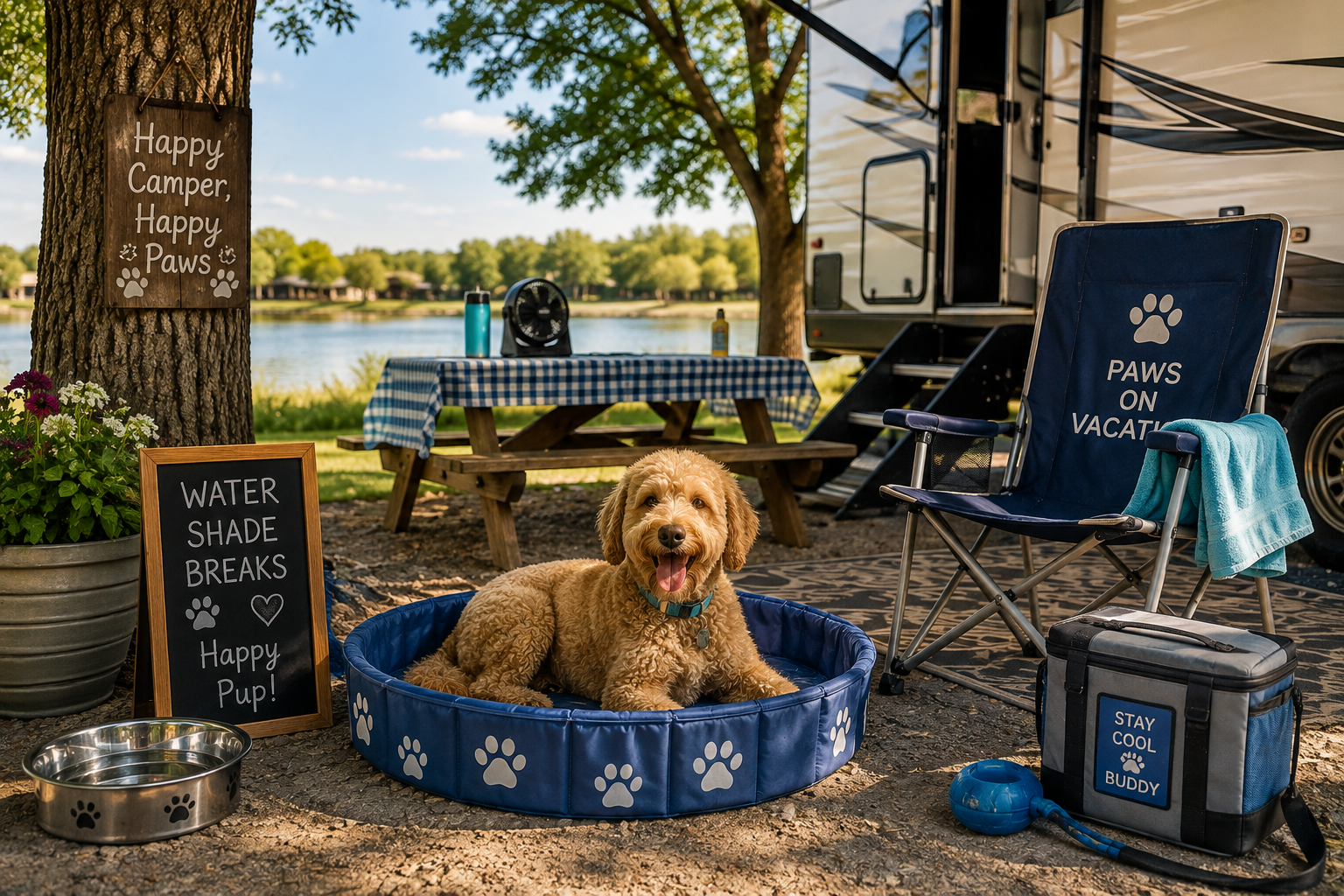
Kansas August heat is genuinely hard on dogs, and the risk is real enough that it deserves more than a passing mention. Heatstroke in dogs develops faster than most owners expect and can be life-threatening, but understanding the actual warning signs and taking a few consistent precautions makes a summer stay at Spring Lake completely manageable for your pet, not something to dread.
Dogs don’t cool down the way people do. They have very limited sweat glands, located mainly in their paw pads, and rely primarily on panting to regulate body temperature — a far less efficient cooling mechanism than human sweating, especially in Kansas August conditions where both air temperature and humidity work against effective panting. Understanding this basic physiological difference is the foundation for taking dog heat safety seriously during a summer RV stay.
Recognizing Heatstroke: The Warning Signs
Early signs of heat stress in dogs include heavy panting, excessive drooling, bright red gums or tongue, and noticeable lethargy or reluctance to move. As heat stress progresses toward heatstroke, symptoms become more severe: vomiting, diarrhea, stumbling or loss of coordination, seizures, and collapse are all signs of a genuine emergency requiring immediate veterinary care. Some breeds are at meaningfully higher risk than others — brachycephalic (short-nosed) breeds like bulldogs, pugs, and boxers have less efficient airways for panting and cool down less effectively even in moderate heat, making them particularly vulnerable during a Kansas summer stay.
Age and Health Factors That Increase Risk
Puppies and senior dogs both have less effective heat regulation than healthy adult dogs in their prime, and dogs with pre-existing heart or respiratory conditions face elevated heatstroke risk even in conditions that a healthy adult dog would tolerate without issue. Overweight dogs are also at higher risk, since excess body fat acts as insulation that makes effective cooling more difficult. If your dog falls into any of these higher-risk categories, extra caution during a Kansas August stay is warranted rather than optional.
“The thing about heatstroke in dogs is how fast it can go from ‘seems a little tired’ to a genuine emergency. Owners sometimes wait to see if their dog ‘shakes it off,’ and that hesitation is exactly the wrong instinct with heat-related illness. If you’re seeing real warning signs, don’t wait around to see if it gets better on its own.”
Never Leave a Dog in a Parked Vehicle or RV Without AC
This deserves its own direct statement: never leave a dog in a parked vehicle or an RV without functioning air conditioning during Kansas summer heat, even for what feels like “just a few minutes.” Interior temperatures in a closed vehicle or RV can climb to dangerous levels within minutes in direct summer sun, even with windows cracked, and this remains one of the most common and entirely preventable causes of pet heatstroke every summer.
Practical Cooling Strategies for a Summer RV Stay
Timing Outdoor Activity
Walk, exercise, and play with your dog during the cooler morning hours and again in the evening once temperatures have started to drop, rather than during the heat of midday. Asphalt and concrete surfaces can reach temperatures high enough to burn a dog’s paw pads on a hot August afternoon — if you can’t comfortably hold the back of your hand on the pavement for several seconds, it’s too hot for your dog’s paws, and this simple test is worth doing before any midday walk.
Water Access and Hydration
Ensure your dog has constant access to fresh, cool water both inside your RV and at any outdoor area you’re using, and bring more water than seems necessary for any outing away from your site. A collapsible travel water bowl makes it easy to offer water frequently during any time spent outdoors, and monitoring your dog’s water intake helps you notice if they’re drinking unusually little, which can itself be a subtle sign of heat stress.
Cooling Products and Techniques
Cooling mats, vests, and bandanas designed specifically for dogs can provide meaningful relief during outdoor time, using evaporative cooling or gel-based cooling technology to help regulate body temperature. A frozen water bottle wrapped in a towel and placed near your dog’s resting area gives a simple, low-cost cooling option. Wetting your dog’s paws, belly, and the back of their neck with cool water before outdoor activity also provides a meaningful cooling boost, since these areas have less fur insulation and more direct heat exchange with the skin.
Making the Most of Spring Lake’s Pet-Friendly Setting
Spring Lake RV Resort’s setting gives dog owners genuine options for managing a pet’s comfort through Kansas summer heat, including shaded areas around the property and the lake itself as a cooling resource, when appropriate for your specific dog and any posted pet swimming guidelines. For the full picture of the resort’s pet-friendly amenities and policies, including any designated pet areas, the Spring Lake park amenities guide covers what’s available on-site, and the RV camping with pets and pet-friendly policies guide covers the specific rules and expectations for traveling with pets at Wichita-area RV parks generally.
Building a Simple Summer Routine for Your Dog
The practical daily rhythm that works well for dogs during a Kansas August RV stay mirrors the same heat-management pattern that benefits humans: morning activity and outdoor time before the day’s heat sets in, a genuinely restful midday period in air-conditioned comfort, and a return to outdoor activity in the evening once temperatures ease. Treating your dog’s daily schedule with the same heat-awareness you’d apply to your own activity planning is the simplest and most effective overall strategy for a safe, comfortable summer stay together.
Heatstroke warning signs: heavy panting, drooling, bright red gums/tongue, lethargy (early). Vomiting, stumbling, seizures, collapse (severe — emergency).
Higher-risk dogs: brachycephalic/short-nosed breeds, puppies, seniors, dogs with heart/respiratory conditions, overweight dogs.
Never: leave a dog in a parked vehicle or RV without working AC, even briefly.
Timing: walk/exercise in early morning and evening, not midday. Test pavement with the back of your hand — too hot for your hand means too hot for paws.
Hydration: constant fresh water access, bring extra for outings, watch for reduced drinking as a subtle warning sign.
Cooling tools: cooling mats/vests/bandanas, frozen water bottle in a towel, wetting paws/belly/neck before activity.
Emergency response: shade/AC immediately, cool (not ice-cold) water on body, vet care right away — don’t wait to see if it improves on its own.
For guests planning a summer stay with pets, the Spring Lake photo gallery gives a sense of the resort’s shaded areas and lake setting. And for booking a pet-friendly summer stay, Wichita RV Park is the starting point.
Frequently Asked Questions
What are the early signs of heatstroke in dogs?
Early signs of heat stress include heavy panting, excessive drooling, bright red gums or tongue, and noticeable lethargy or reluctance to move. As heat stress progresses toward heatstroke, more severe symptoms can develop, including vomiting, diarrhea, stumbling or loss of coordination, seizures, and collapse. If you notice any of the severe symptoms, this is a medical emergency requiring immediate cooling measures and veterinary care, not a wait-and-see situation.
Which dog breeds are most at risk of heatstroke?
Brachycephalic, or short-nosed, breeds including bulldogs, pugs, and boxers are at meaningfully higher risk, since their airway structure makes panting a less efficient cooling mechanism even in moderate heat. Puppies, senior dogs, overweight dogs, and dogs with pre-existing heart or respiratory conditions also face elevated heatstroke risk compared to healthy adult dogs. Extra caution during Kansas summer heat is warranted for dogs in any of these higher-risk categories.
Is it ever okay to leave my dog in the RV for a few minutes during summer?
Only if the air conditioning is functioning and actively maintaining a safe interior temperature. Leaving a dog in a parked vehicle or an RV without working AC, even briefly, is genuinely dangerous during Kansas summer heat, since interior temperatures can climb to unsafe levels within minutes in direct sun, even with windows cracked. This remains one of the most common and entirely preventable causes of pet heatstroke every summer, and there is no safe “just a few minutes” exception without functioning climate control.
How do I know if the pavement is too hot for my dog’s paws?
Press the back of your hand firmly against the pavement or asphalt for about seven seconds. If it’s too hot for you to comfortably hold your hand there, it’s too hot for your dog’s paw pads, which can burn on hot summer surfaces. This simple test is worth doing before any midday walk during Kansas August heat, and scheduling walks for the cooler morning and evening hours avoids the issue entirely.
What should I do if I think my dog is having a heatstroke emergency?
Move your dog to shade or air conditioning immediately, offer water without forcing it, and begin cooling with cool — not ice-cold — water applied to the body, particularly the belly, paws, and ears, while getting to a veterinarian right away. Heatstroke can be fatal within a short window, and veterinary evaluation is recommended even if your dog appears to improve, since internal damage from heatstroke isn’t always visible from the outside.
What cooling products actually help dogs during hot weather camping?
Cooling mats, vests, and bandanas designed for dogs use evaporative cooling or gel-based technology to help regulate body temperature during outdoor time. A frozen water bottle wrapped in a towel and placed near a dog’s resting area provides a simple, low-cost cooling option. Wetting a dog’s paws, belly, and the back of the neck with cool water before outdoor activity also provides meaningful cooling benefit, since these areas have less fur insulation and more direct heat exchange with the skin.