
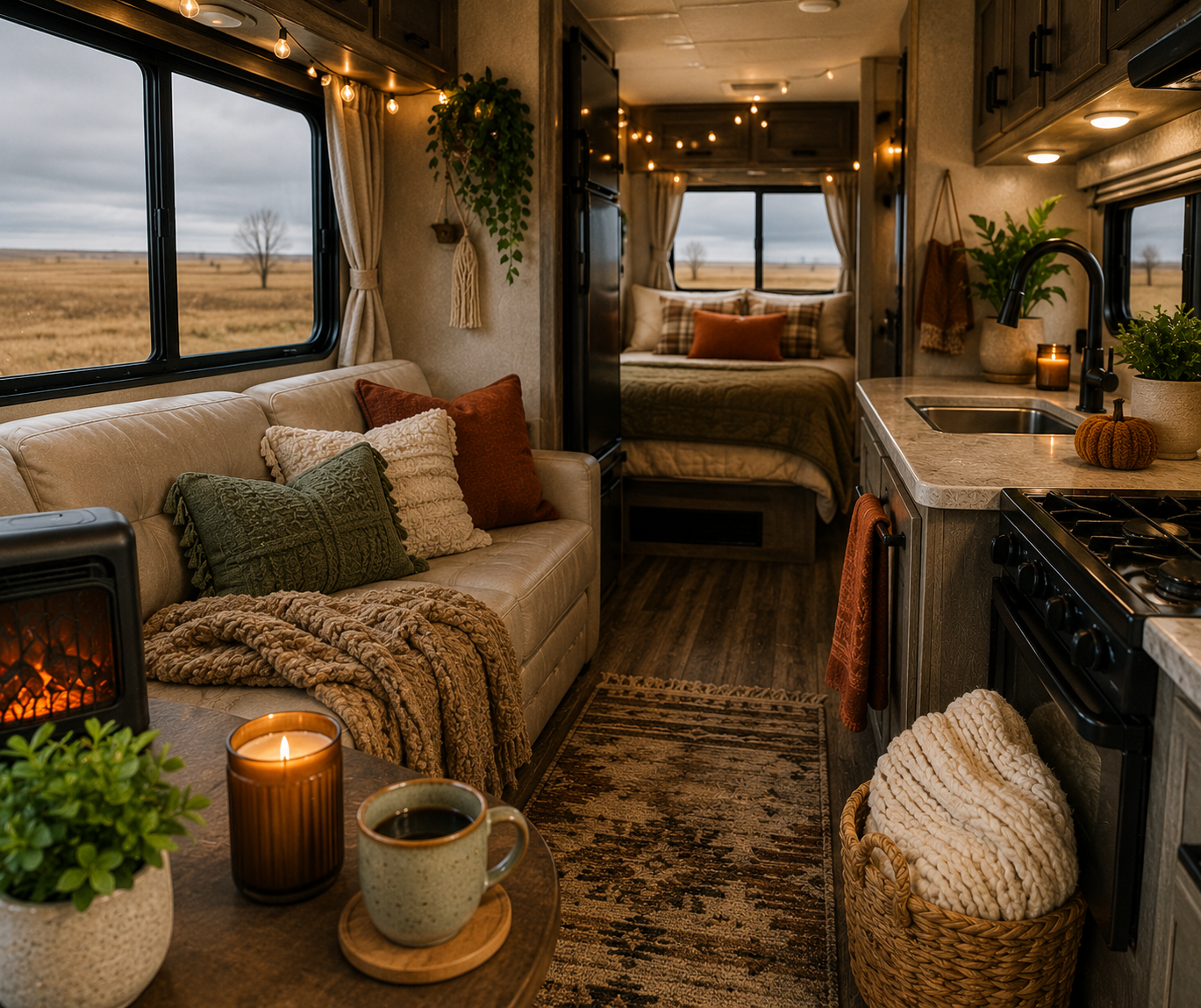
There’s a real difference between camping in your RV and actually living in it. Camping means tolerating a few inconveniences because you’re only there for the weekend and the outdoor part is the point. Living in it — for weeks, sometimes months — means the interior has to actually function as a home. The small irritations that you’d brush off on a two-night trip become genuine daily frustrations by week three.
Kansas winters are real. A cold January in Wichita doesn’t care how nice the campsite looked in the brochure, and there are stretches of weather where going outside is genuinely unpleasant for days at a time. Those are the days when your RV either feels like a comfortable refuge or a cramped box on wheels, and the difference is almost entirely in how you’ve set it up.
This guide is for the person staying longer — the full-timer, the extended job placement, the seasonal traveler who picked south-central Kansas as a base for the next few months. Here’s how to make the space genuinely cozy and livable, not just functional.
Start With Light: The Most Overlooked Comfort Variable
Lighting is probably the single most impactful and most consistently overlooked element of RV interior comfort. The default lighting in most RVs is harsh, flat, and institutional — the kind of overhead fluorescent or cool LED strips that work fine for finding things in a storage compartment but make the living space feel like a break room.
Warm-toned bulbs — 2700K to 3000K color temperature — in the living and sleeping areas change the feel of the entire rig in a way that’s hard to fully appreciate until you’ve done it. Switch out whatever came with the coach for warm LED bulbs. It’s inexpensive, takes twenty minutes, and the difference in how the space feels on a dark Kansas winter evening is dramatic.
Add lamps. A small table lamp or two creates pools of warm light that give the space zones and dimension. The visual effect of having a lit lamp in a corner versus overhead lighting hitting every surface equally is the difference between a hotel room and a living room. Clip-on reading lights at the bed and a small lamp near the seating area are the specific additions that most consistently transform a flat-lit RV interior into something that feels like a place you want to be.
String lights — warm white, not the cool multicolor variety — along a window ledge or across the rear of the living area add atmosphere for almost no money and almost no space. They’re not for everyone, but for extended winter stays when darkness comes early, they do real work.
Warmth and Texture: What Makes a Space Feel Like Home
Cold, hard surfaces make people feel like they’re in a vehicle. Soft, warm surfaces make people feel like they’re somewhere they belong. The challenge in an RV is adding warmth and texture without making the space feel cluttered or creating storage problems when you move.
Throw Blankets and Cushion Covers
A few quality throw blankets on the seating areas serve dual purposes: they make the space look intentional and lived-in, and they’re genuinely useful during a Kansas winter when the coach is cold in the morning before the heat has caught up. One good throw blanket on the couch and a folded one at the foot of the bed converts a generic RV interior into something that reads as personal.
Removable cushion covers in a color or pattern you actually like are worth the small effort they require. Most RV cushion covers are a neutral beige or gray chosen for inoffensiveness rather than appeal. Replacing them with something you picked out costs very little and changes the visual tone of the entire living area.
A Small Rug That’s Actually Yours
Floor texture makes an enormous difference in a small space. A rug — not the factory floor mat, but an actual rug you brought — grounds the living area and adds a layer of warmth both literal and visual. It doesn’t need to be large. Even a 2×4 foot rug in front of the seating area changes how the floor space reads and makes the interior feel intentionally arranged rather than factory-issued.
Washable rugs are the practical choice for RV use. Ruggable and similar brands make quality flat-woven rugs with machine-washable covers specifically for this kind of situation.
Organization That Actually Holds Up Over Weeks
A two-night trip can absorb a lot of organizational disorder because you’re never there long enough for it to pile up. A two-month stay cannot. The organization system you build in week one is the system that either serves you or frustrates you every single day after that, so it’s worth getting right from the start.
Vertical Space Is Underused in Almost Every RV
Most RV storage thinking is horizontal — things in cabinets, things in bins, things on shelves. The vertical space on walls and the backs of doors is almost always wasted. Command hooks and strips can hold an enormous amount without damaging surfaces, and over-door organizers on every cabinet door that will accept them effectively double the accessible storage in a kitchen or bathroom without adding any floor footprint.
A magnetic strip mounted inside a kitchen cabinet holds all your knives and small metal tools without taking up any drawer space. A suction-cup shower caddy keeps bathroom supplies organized and visible. A small wall-mounted organizer near the entry holds keys, sunglasses, hats, and whatever you grab daily so those things are always where you left them rather than wherever you set them down last.
One Category, One Bin
Under-bed storage and external bays are where organizational entropy most reliably strikes on longer stays. The fix is simple and requires only discipline: one bin per category. Cleaning supplies. Medications. Spare tools. Seasonal clothes. When everything shares a container, nothing is findable. When each category has its own clearly labeled bin, a two-minute search for ibuprofen at 11pm becomes a ten-second task.
Label the bins. On the outside, where you can read them without pulling everything out. This sounds obsessive until you’ve been in a 300-square-foot space for six weeks and tried to find your tire pressure gauge.
Temperature Management for Kansas Seasons
Kansas weather is not subtle. It goes from cold to hot faster than you’d expect, and staying comfortable indoors through those transitions requires a bit of preparation.
For winter — and Wichita winters can drop below zero with wind chill factored in — RV propane and electric heat work well when paired with good window insulation. Reflectix cut-to-fit window inserts eliminate a significant amount of cold transfer through the glass and dramatically reduce how hard your heating system has to work. They’re light, cheap, and reversible for summer use. Draft snakes or door sweeps at the entry door address the gap that most stock RVs leave at the threshold.
A small ceramic space heater as a supplement to the main heating system lets you heat just the living area or bedroom without running the whole coach’s system all night. Quieter and more efficient for localized warming than relying entirely on the RV’s propane furnace, which cycles loudly and not always efficiently.
Kansas summers bring heat and humidity together in a way that requires your AC to actually function well — not just exist. Make sure the filters are clean before summer starts and the unit is serviced if it hasn’t been recently. A small fan positioned to direct cooled air into the sleeping area makes a significant difference in overnight comfort when outdoor temperatures don’t drop as low as you’d like.
Building Personal Zones in a Small Space
One of the underappreciated challenges of long-term RV living is the absence of zones. In a house, you move from a kitchen to a living room to a bedroom and the physical transition helps your brain shift gears. In an RV, it’s all one continuous space, and that lack of distinction can make the space feel simultaneously cramped and directionless.
The hack for this is creating visual and functional zone distinctions without physical walls. A rug defines the living area. A specific lamp that only gets used in the reading corner makes that corner feel like a reading corner. A small folding table set up as a dedicated workspace — different chair, different light, laptop and nothing else — creates the psychological separation between “work mode” and “off mode” that long-term remote workers in RVs consistently identify as important.
It doesn’t require renovation or major furniture. It requires intentional arrangement and a few consistent habits about how you use different parts of the space.
The park amenities and site details at Wichita RV Park cover what infrastructure and utilities are available to support a properly set-up long-term stay — full hookups, Wi-Fi access, and facilities that make the difference between managing daily life and genuinely enjoying it. For guests settling in for an extended period, the long-term stay options and rates make it practical to commit to a proper setup rather than treating everything as temporary.
Small Personal Items That Matter More Than You Think
Here’s the thing about making an RV feel like home during a long stay in Kansas: the biggest psychological shift usually comes from the smallest items. Not the organization system, not the lighting upgrade — though both of those matter. It’s the thing from home that has no practical function except being yours.
A favorite coffee mug that you only drink from in the morning. A small plant that you’re responsible for keeping alive. A framed photo on the ledge above the sink. A candle in a scent that smells like wherever home is. A worn paperback you’ve read four times that lives on the shelf because it belongs there.
These things cost almost nothing and take almost no space. What they do — consistently and without requiring any effort after the initial decision to bring them — is signal to your nervous system that this is a place you inhabit rather than a vehicle you’re managing. That signal is worth more than any organizational upgrade on a long stay.
For travelers exploring the Wichita area and surroundings during their stay, the Wichita area activities and visitor guide and the Halstead and surrounding area guide give you plenty of reasons to get out of the rig on the good days and come home to something comfortable on the ones that push you back inside.
For travelers considering a base slightly further west in the region, the RV park near Hutchinson, KS is another well-positioned option in the south-central Kansas corridor worth knowing about. And for shorter stays before or after a longer Kansas stretch, the short-term stay details at Wichita RV Park make the logistics simple.
Set it up right. Kansas winters are long, but a genuinely cozy RV interior makes them something to settle into rather than endure.
Frequently Asked Questions
How do I make my RV feel cozy during a long winter stay in Kansas?
Lighting is the highest-impact single change — replace harsh cool overhead LEDs with warm-toned bulbs (2700K to 3000K) and add a table lamp or two for localized warm light. Add throws and cushion covers in colors you actually like, a small rug in the living area, and at least one personal item from home that has no practical function except being familiar. For temperature management, Reflectix window inserts reduce cold transfer significantly and a small ceramic space heater supplements the main system for localized warmth without running the whole furnace all night.
What is the best lighting for a cozy RV interior?
Warm-toned LED bulbs in the 2700K to 3000K color temperature range replace the harsh cool light that most factory RVs use. Table lamps with warm bulbs create pools of light that give a small space visual zones and dimension. Clip-on reading lights at the bed serve a specific function without requiring a floor lamp. Warm white string lights along a window ledge or across a wall add atmosphere for very little cost or space. The combination of overhead warm bulbs and one or two supplemental lamps is the most consistent recipe for transforming a generic RV interior into something that feels genuinely comfortable.
How do I organize an RV for a multi-month stay?
The core principle is one category per container with clear labels visible without pulling things out. Use vertical space aggressively — over-door organizers, Command hooks, magnetic strips inside cabinet doors — to create accessible storage without reducing floor space. Under-bed and bay storage stays manageable with labeled bins assigned to specific categories rather than mixed general storage. A designated home for daily-use items near the entry (keys, sunglasses, hat, bug spray) eliminates the low-grade daily friction of never knowing where those things are. Build the system in the first week and maintain it with a brief daily reset before bed.
How cold does it get in Wichita, Kansas, and how do I keep my RV warm?
Wichita winters regularly bring temperatures below freezing, with overnight lows occasionally dropping into the single digits during cold snaps. Wind chill can push effective temperatures considerably lower. Reflectix cut-to-fit window inserts are the single most impactful insulation addition — they dramatically reduce cold air transfer through glass at minimal cost. A door sweep or draft snake at the entry threshold addresses the most common cold air entry point. A supplemental ceramic space heater lets you heat just the sleeping area overnight without running the propane furnace continuously. Skirting the rig if you’re parked for several months significantly reduces heat loss from below.
What small items make the biggest difference in long-term RV comfort?
Beyond the practical organization and insulation items, the things that most consistently make a long-stay RV feel like home are personal rather than functional: a familiar mug, a small plant, a framed photo, a candle, a worn book that lives on the shelf. These signal habitation rather than transit, which has a real psychological effect on how comfortable and settled a person feels in a small space over a long period. Supplementally: a quality mattress topper, a personal reading light, and a small rug in the living area are the practical items that most improve daily quality of life on extended stays.
Is Wichita RV Park suitable for long-term stays?
Yes. The park offers long-term stay options with full hookups that support the utilities and setup needed for genuinely comfortable extended living — reliable power for supplemental heating and cooling, water and sewer connections, and Wi-Fi access for remote workers or entertainment. The Wichita location provides access to the city’s amenities, grocery stores, hardware and supply stores, and the outdoor recreation options that make a multi-month stay in south-central Kansas both practical and worth doing. The long-term stay information page on the park’s website covers rates and availability for guests planning an extended stop.
How do I create separate zones in a small RV living space?
Zone definition in a small space is achieved through visual and functional cues rather than physical separation. A rug anchors and defines the living area. A dedicated lamp that only gets used in one corner creates a reading zone without construction. A small folding table with a specific chair that functions exclusively as a workspace creates psychological separation between work and rest modes — important for remote workers spending months in a single space. Consistent habits about how you use different areas reinforce these zones over time. The goal isn’t architectural — it’s giving your brain clear signals about what mode you’re in based on where in the rig you’re sitting.