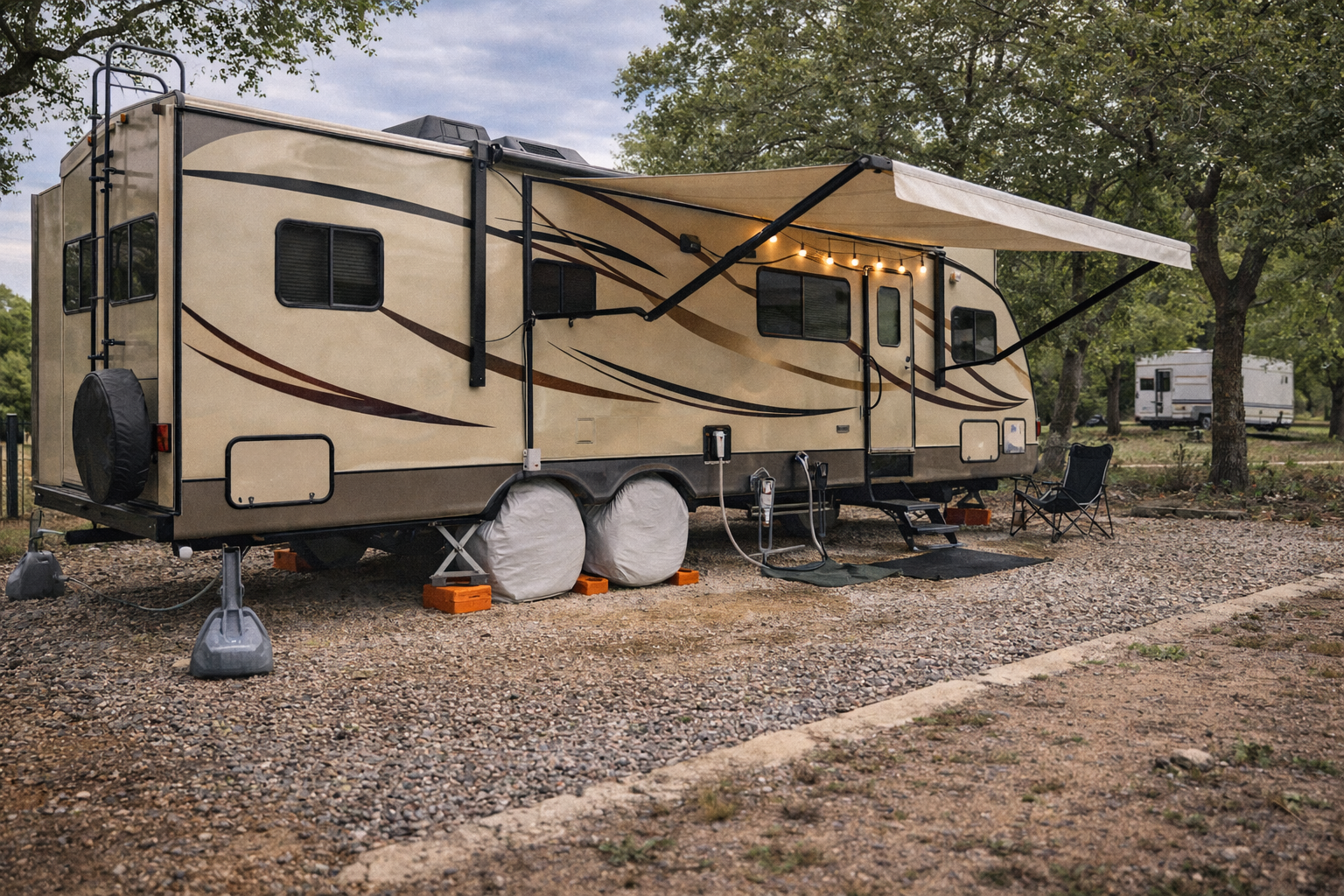
If you’ve spent enough time RVing, you already know not every site comes with a perfectly poured concrete pad. And honestly, that’s not a bad thing. Gravel and mixed-surface RV pads are incredibly common, especially at parks built for longer stays rather than overnight turnover.
The difference is this: setting up for a night or two on gravel is one thing. Setting up for weeks or months is something else entirely.
Extended stay RV setup on gravel takes a bit more thought, a little patience, and the right approach. Done well, it can be just as stable and comfortable as any paved site. Done poorly, it leads to shifting jacks, uneven floors, and that constant “something feels off” feeling you never quite get used to.
This guide walks through how to set up your RV properly on gravel or mixed-surface pads so it stays level, secure, and comfortable for the long haul.
Why Gravel Pads Are So Common for Long-Term RV Stays
Gravel pads aren’t a downgrade. In many cases, they’re intentional.
RV parks that focus on long-term guests often use gravel because it:
- Drains water better than concrete
- Adapts to soil movement
- Reduces cracking and repair costs
- Stays cooler in summer
Well-maintained gravel sites, like those found near RV park near Haysville, are designed with extended stays in mind. They just require a different setup strategy.
Start With Pad Assessment Before You Park
Before you even pull fully into the site, stop and look.
Check:
- Slope front to back and side to side
- Areas where gravel is thinner or compacted
- Soft spots from recent rain
This quick assessment helps you decide where your wheels should sit and how much leveling you’ll need. On mixed-surface pads, you might have gravel under the tires but concrete under the jacks, or vice versa.
That matters more than people realize.
Leveling RV on Gravel Starts With the Tires
Your tires do most of the work. Jacks are for stabilizing, not correcting major tilt.
For leveling RV on gravel:
- Use solid leveling blocks under tires
- Avoid stacking unstable materials
- Make sure blocks sit flat on compacted gravel
If the gravel is loose, kick it aside until you reach a more compact layer. Setting blocks on loose gravel leads to sinking over time, which throws everything off later.
Once tires are level, everything else becomes easier.
Use the Right Jack Pads (This Is Non-Negotiable)
Extended stay RV setup on gravel absolutely requires proper jack pads.
Good jack pads:
- Distribute weight evenly
- Prevent jacks from sinking
- Protect jack feet from abrasion
Avoid thin plastic pads on loose gravel. They flex and shift. Heavier-duty rubber or composite pads work far better for long-term stays.
On mixed-surface pads, still use pads even if jacks touch concrete. They reduce vibration and protect equipment.
Stabilizing RV Long Term Is About Balance, Not Force
This is where many RVers go wrong.
Stabilizing RV long term does not mean cranking jacks down as hard as possible. Over-tightening:
- Stresses the frame
- Causes uneven settling
- Makes movement worse, not better
Instead:
- Lower jacks until they make firm contact
- Add only enough pressure to reduce movement
- Recheck after 24–48 hours
Gravel naturally shifts a bit, especially with temperature changes. A gentle approach works better over time.
Mixed-Surface Pads Require Extra Attention
Mixed-surface RV sites are common and can be great if handled correctly.
Challenges include:
- Different settling rates
- Uneven friction between surfaces
- Inconsistent drainage
To manage this:
- Use pads under all jacks, regardless of surface
- Check level again after the first few days
- Adjust gradually instead of all at once
Once settled, mixed-surface pads tend to stay stable longer than pure gravel, but the initial setup is key.
Skirting and Wind Considerations
For longer stays, especially in open areas, skirting can improve comfort.
Benefits include:
- Reduced wind under the RV
- More stable interior temperatures
- Less movement during storms
On gravel pads, make sure skirting materials don’t trap moisture against the RV or rest directly on loose gravel without support.
Some parks designed for extended stays, like Wichita RV Park, have sites laid out to minimize wind exposure, which helps more than people expect.
Managing Drainage Around Your RV
Gravel drains well, but water still flows.
After rain:
- Check for pooling near jacks
- Look for erosion around pads
- Add gravel if needed to fill low spots
This is part of good RV site preparation. You don’t need to obsess over it, but ignoring drainage issues can lead to shifting over time.
A little maintenance now saves a lot of re-leveling later.
Interior Movement: Reduce It Before It Drives You Crazy
Even with a good setup, gravel sites can allow more micro-movement than concrete.
Simple fixes help:
- Use wheel chocks front and back
- Add cross-brace stabilizers if needed
- Secure loose interior items
Movement isn’t dangerous, but it can get annoying. Reducing it improves quality of life more than most upgrades.
Recheck Everything After the First Week
This step gets skipped a lot.
After a week:
- Recheck level
- Inspect jack pads
- Look for tire impressions in gravel
Gravel settles. Temperature changes happen. Weight redistributes. One quick check keeps small issues from becoming ongoing ones.
I skipped this once and wondered why my door stopped closing right. Took me a minute to connect the dots.
Why Long-Term RV Parks Design Gravel Sites Differently
Not all gravel pads are created equal.
Parks built for extended stays often:
- Use compacted base layers
- Maintain consistent grading
- Refresh gravel regularly
Learning more about park amenities and layout helps explain why some gravel sites feel rock solid while others feel temporary.
It’s not the gravel, it’s how it’s built.
Long-Term Comfort Goes Beyond Leveling
Extended stay RV setup is about more than physics.
Think about:
- Outdoor rugs to reduce tracked gravel
- Defined walkways
- Storage placement to avoid shifting weight
These small adjustments make living on gravel feel intentional instead of makeshift.
If you’re planning to stay awhile, reviewing options for long-term RV stays helps ensure the site itself supports that lifestyle.
Common Mistakes RVers Make on Gravel Pads
A few patterns show up often:
- Skipping jack pads
- Over-tightening stabilizers
- Ignoring drainage
- Assuming “it’ll settle itself”
Gravel sites reward attention, not force.
FAQs About Setting Up an RV on Gravel Pads
Is it safe to stay long-term on a gravel RV pad?
Yes, when properly set up and maintained.
Do gravel pads cause more RV movement?
Slightly, but proper leveling and stabilization reduce it significantly.
How often should I re-level on gravel?
Check after the first week, then periodically, especially after heavy rain.
Are mixed-surface pads better than all-gravel?
They can be, but they require careful initial setup.
Do I need special equipment for gravel pads?
Quality leveling blocks and jack pads make a big difference.
Final Thoughts
Setting up your RV on gravel or mixed-surface pads for an extended stay isn’t about working harder. It’s about working smarter.
Take time upfront. Use the right supports. Let the RV settle naturally instead of fighting it. Once everything finds its place, gravel sites can be stable, comfortable, and surprisingly low-maintenance.
When done right, you stop thinking about the pad entirely. And that’s the goal. The RV feels like home, the site feels solid, and you can focus on living your life instead of adjusting your jacks for the hundredth time.