
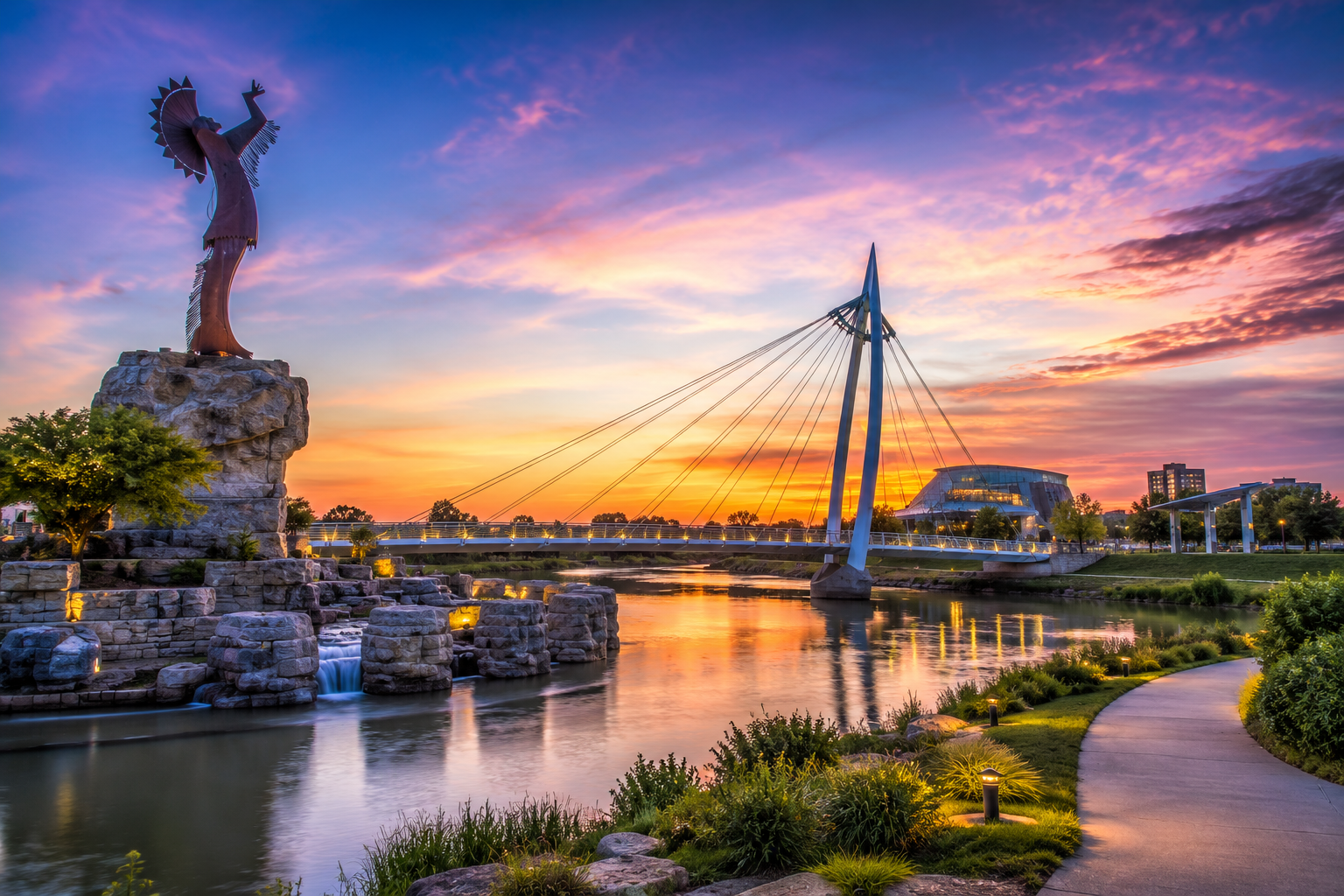
Most people driving through Wichita on I-135 or I-35 don’t realize that one of the most genuinely striking public sculptures in the American heartland is sitting right at the confluence of two rivers a few minutes from the interstate. The Keeper of the Plains deserves a longer look than the highway view provides.
For visitors staying at Spring Lake RV Resort in Halstead, the Wichita riverfront is a 30 to 40-minute drive that justifies a half-day to full-day excursion built around the Keeper and the surrounding landmarks. This guide covers what’s there, the history behind it, and how to structure the visit.
The Keeper of the Plains: History and Significance
The Keeper of the Plains was created by Kiowa-Comanche artist Blackbear Bosin and installed at the confluence of the two rivers in 1974 as part of Wichita’s centennial celebration. Bosin, who spent most of his adult life in Wichita, created the sculpture as a tribute to the Native American heritage of the Great Plains region — the peoples who lived along these rivers for thousands of years before European settlement transformed the landscape.
The sculpture stands 44 feet tall atop a 30-foot pedestal, putting the total installation at 74 feet above the riverbank. The Cor-Ten weathering steel from which it’s made develops its characteristic reddish-brown patina through natural oxidation — no paint, no coating, just the material’s own chemical process that intensifies and deepens over decades of exposure. At this point, more than 50 years since installation, the Keeper has the specific color and texture of something that has been in this landscape for a long time, which is exactly what it communicates.
The figure depicts a Plains Indian man standing with his arms raised — a posture of recognition and reverence toward the sky, the earth, and the confluence of the rivers below. For the peoples who lived along the Arkansas River corridor, the confluence of rivers was a sacred geographic marker — a place of meeting, of spiritual significance, and of practical importance for a landscape organized around water. The sculpture acknowledges this history at the exact point in the landscape where it was made.
“The Keeper of the Plains earns its reputation. The combination of the scale, the position at the river confluence, and the fire rings lit at dusk produces an experience that sits with you after you’ve left.”
The Fire Ring Ceremony: When to Visit
The Wichita riverfront landmark experience peaks during the fire ring lighting ceremony that occurs on most evenings during the warmer months. Four fire rings positioned around the base of the sculpture’s pedestal are lit at dusk — the City of Wichita maintains a schedule, typically Tuesday through Sunday during summer and on weekend evenings in spring and fall, though confirming the current schedule through the City of Wichita website or the Mid-America All-Indian Center before planning your visit is advisable.
The fire ring lighting produces a specific visual effect: the 44-foot steel figure silhouetted against the darkening Kansas sky with four fire rings casting moving light across the weathered steel surface and the river below. Photographs don’t fully capture the scale and the atmosphere — the actual experience of standing on the pedestrian bridge that crosses the Arkansas River adjacent to the sculpture, watching the fires light at dusk as the river reflects the last of the evening light, is something that benefits from being in it rather than looking at a screen.
The fire ring ceremony lasts approximately one hour from lighting to extinguishing. Arriving 30 minutes before scheduled lighting time puts you in position to see the full ceremony without scrambling for a viewing spot as the crowd fills in.
The Mid-America All-Indian Center
Adjacent to the Keeper of the Plains on the east bank of the Arkansas River, the Mid-America All-Indian Center is the cultural institution most directly connected to the sculpture and the history it represents. The center operates as a Native American arts and culture museum with rotating and permanent exhibitions covering the tribes of the Great Plains — their art, their history, and their ongoing cultural presence in the region.
The center houses a significant collection of Plains Indian art including works by Blackbear Bosin himself, whose paintings and illustrations are held in major collections across the country. A visit to the center alongside the Keeper grounds gives the sculpture historical and cultural context that makes the experience significantly richer than standing at the base of a statue without that background. The center’s admission is modest; checking their current hours and any special programming before visiting ensures you’re making the most of the stop.
The Riverfront Trail System and Pedestrian Bridges
The broader Wichita riverfront, extending from the Keeper of the Plains north along the Arkansas River and the Little Arkansas confluence, has developed into a genuine walking destination with pedestrian bridges, river-access paths, and the Wichita River Festival infrastructure that makes the waterfront a year-round community asset rather than just a backdrop for the sculpture.
The Pedestrian Island at the confluence — accessible by bridge from both the east and west banks — gives a river-level view of the Keeper from below and puts visitors at the actual point where the two rivers join, which has its own geographic resonance when you understand the significance of the confluence in the Plains Indian landscape framework. The island is a popular photography location for obvious reasons, and the river-level perspective on the sculpture is entirely different from the elevated bank views.
The Exploration Place Science Center
Exploration Place, Wichita’s science and technology museum, sits on the west bank of the Arkansas River within easy walking distance of the Keeper of the Plains. It’s primarily designed for families with children but has programming and exhibits that engage adult visitors as well. For a full-day riverfront excursion that combines the Keeper, the Mid-America All-Indian Center, and a science museum visit, the riverfront district covers all of it within a compact walking area.
The Arkansas River Path System
The Arkansas River path system extends well beyond the immediate Keeper of the Plains area — Wichita has invested significantly in the paved trail network that runs along both banks of the river through the city. From the Keeper, the path extends north toward downtown Wichita and south toward the older residential neighborhoods that give Wichita its distinct character. A late afternoon or early evening walk on the river path — arriving at the Keeper area as the fire ring lighting approaches — is one of the better Wichita afternoon experiences available.
Planning Your Visit from Spring Lake RV Resort
The Wichita riverfront is approximately 30 to 40 miles east of Spring Lake RV Resort in Halstead on US-50. The drive into central Wichita runs 35 to 45 minutes depending on traffic — significantly lighter than the Wichita metro arterials during peak commute hours.
A full riverfront day trip from Spring Lake covers: Keeper of the Plains arrival in the afternoon, Mid-America All-Indian Center visit (approximately 90 minutes), dinner at a central Wichita restaurant, and fire ring ceremony at dusk. This produces a 6 to 8-hour day trip that uses the timing well — the fire ring ceremony is the natural anchor around which the rest of the day is organized, and dinner in the adjacent Old Town district or along Douglas Avenue makes the evening complete before the drive back to Halstead.
Distance from Halstead: approximately 35–40 miles east on US-50. Drive time: 35–45 minutes.
Fire ring ceremony: typically Tuesday–Sunday in summer at dusk. Confirm current schedule at the City of Wichita website before visiting.
Mid-America All-Indian Center: adjacent to the Keeper on the east bank. Check current hours before visiting.
Exploration Place: west bank, walking distance from the Keeper. Best for families with children.
Plan: afternoon arrival → Mid-America All-Indian Center → Pedestrian Island → Old Town dinner → fire ring ceremony at dusk.
For the full picture of Wichita day trips and city activities from Spring Lake RV Resort, the Wichita area exploration guide covers what the city offers beyond the riverfront. The Halstead area guide covers what’s near the resort itself. For guests planning an extended stay that includes multiple Wichita day trips, the extended stay rates give the economics for a longer base at Spring Lake. Short-term visitors can find booking information on the short-term stays page. Travelers approaching from the south through Haysville can check the RV park near Haysville, KS page. For more on the resort’s amenities and what’s available on-site, the park amenities page covers it. Additional day trip and area content is in the park blog. And for everything about planning a stay, Wichita RV Park is where to start.
Frequently Asked Questions
What is the Keeper of the Plains in Wichita?
The Keeper of the Plains is a 44-foot Cor-Ten weathering steel sculpture by Kiowa-Comanche artist Blackbear Bosin, installed at the confluence of the Arkansas and Little Arkansas Rivers in Wichita in 1974 as part of the city’s centennial celebration. The sculpture depicts a Plains Indian figure with arms raised in a posture of recognition and reverence, positioned at a geographic point that held spiritual and practical significance for the Native peoples who lived along these river corridors for thousands of years. The Cor-Ten steel has developed a deep reddish-brown patina through 50 years of natural oxidation. It stands 44 feet tall on a 30-foot pedestal, reaching 74 feet total, and is considered one of the most significant pieces of public art in the American Plains.
When are the fire rings at the Keeper of the Plains lit?
The fire rings surrounding the Keeper of the Plains pedestal are lit at dusk on most evenings during the warmer months — typically Tuesday through Sunday in summer and on weekend evenings in spring and fall. The ceremony lasts approximately one hour from lighting to extinguishing. The City of Wichita publishes the current fire ring schedule online; confirming the schedule before planning a visit is advisable, as it can vary by season and specific dates. Arriving 20 to 30 minutes before the scheduled lighting time gives you the best viewing position as the crowd arrives for the ceremony.
What is the Mid-America All-Indian Center near the Keeper?
The Mid-America All-Indian Center is a Native American arts and culture museum located on the east bank of the Arkansas River adjacent to the Keeper of the Plains. It operates rotating and permanent exhibitions covering the tribes and cultures of the Great Plains, with a significant collection of Native American art including works by Blackbear Bosin, the sculptor who created the Keeper. A visit to the center gives the historical and cultural context that enriches the experience of the sculpture significantly — understanding what the confluence of the rivers meant to the Plains peoples, and how the sculpture represents that history, changes how the Keeper is experienced. Admission is modest; current hours and programming are confirmed on the center’s website or by phone before visiting.
Is the Keeper of the Plains free to visit?
Yes. The Keeper of the Plains sculpture and the surrounding riverfront area — including the Pedestrian Island at the confluence, the pedestrian bridges, and the river trail system — are public spaces accessible free of charge. Parking is available in the surrounding streets and a public lot near the Mid-America All-Indian Center. The fire ring ceremony is also free to attend. The Mid-America All-Indian Center museum, adjacent to the sculpture, has its own admission fee. Exploration Place, the science museum on the west bank, also has a separate admission. Plan accordingly for the full visit.
Who is Blackbear Bosin and why is he significant?
Blackbear Bosin (1921-1980) was a Kiowa-Comanche artist who spent most of his adult life in Wichita, Kansas. He is considered one of the most important Native American artists of the 20th century, recognized for both his paintings and his public sculpture work. His paintings, which draw on Plains Indian visual traditions while incorporating contemporary techniques, are held in major collections including the Smithsonian Institution. The Keeper of the Plains is his most publicly visible work and the piece that anchors his legacy in the Wichita cultural landscape. Bosin was deeply committed to representing Native American heritage accurately and respectfully in his work — the Keeper reflects both his artistic vision and his personal identity as a Plains Indian artist working in the region his people have called home for generations.
How far is the Keeper of the Plains from Spring Lake RV Resort in Halstead?
The Keeper of the Plains is approximately 35 to 40 miles east of Spring Lake RV Resort in Halstead on US-50, with a typical drive time of 35 to 45 minutes into central Wichita. The route is straightforward — US-50 east from Halstead runs directly into the Wichita metro corridor, connecting to the main arterials that lead to the riverfront district near downtown. For a full-day visit that includes the Mid-America All-Indian Center, a walk on the Pedestrian Island, dinner in Old Town, and the fire ring ceremony at dusk, plan to leave Halstead in the early-to-mid afternoon to arrive with time for the cultural visit before the evening program.