Let’s be real for a second…
Insurance isn’t the fun part of planning an RV trip. You’re thinking about the route, where you’ll stay, what you’ll eat—not coverage limits and policy details.
But here’s the thing. When something unexpected happens (and it eventually does for most travelers), RV insurance is what keeps a small issue from turning into a really expensive problem.
If you’re heading to Wichita, Kansas, this guide will walk you through the essentials—what you need, what you don’t, and how to make sure you’re actually protected before you roll into town.
Why RV Insurance Matters More Than You Think
An RV isn’t just a vehicle.
It’s your:
- Transportation
- Living space
- Travel investment
That combination changes how insurance works.
Without Proper Coverage, You Could Face:
- Costly repairs after accidents
- Liability claims if someone gets hurt
- Loss of personal belongings
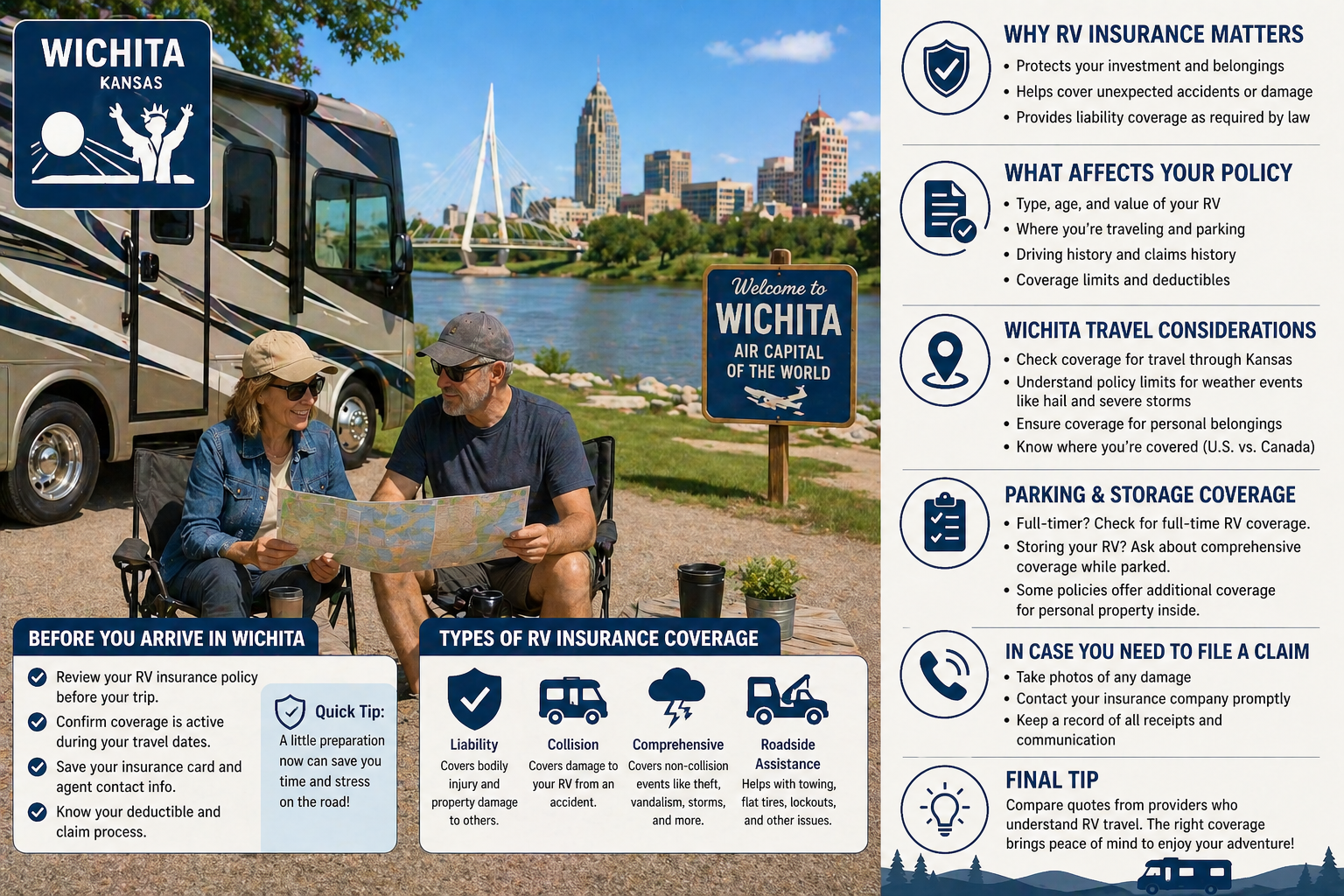
Understanding RV insurance Kansas basics upfront saves you from figuring it out the hard way later.
What RV Insurance Actually Covers
At a basic level, RV insurance combines auto insurance and home-like protection.
Standard Coverage Includes:
- Liability
- Collision
- Comprehensive
RV-Specific Coverage May Include:
- Personal belongings protection
- Vacation liability
- Emergency expense coverage
That’s where real RV coverage options start to matter.
Liability Coverage: The Non-Negotiable
This is required in Kansas.
It Covers:
- Injuries to others
- Property damage you cause
- Legal costs
Kansas law requires minimum liability coverage, so this isn’t optional—it’s your foundation.
Understanding Kansas RV insurance laws helps you stay compliant and avoid issues.
Collision vs Comprehensive (Quick Breakdown)
These two get mixed up a lot.
Collision Covers:
- Accidents
- Rollovers
- Impact damage
Comprehensive Covers:
- Weather damage
- Theft
- Fire
Both matter, especially when traveling long distances.
Personal Belongings Coverage
Think about everything inside your RV.
This Might Include:
- Clothes
- Electronics
- Kitchen gear
Standard auto insurance won’t cover these—but RV policies often do.
This is a key part of protecting your RV investment.
Vacation Liability Coverage (Underrated but Important)
This one surprises people.
It Applies When:
- You’re parked at a campsite
- Someone gets injured near your RV
- There’s damage involving your setup
Basically, it covers you when your RV is acting more like a home than a vehicle.
Emergency Expense Coverage
Trips don’t always go as planned.
This Helps Cover:
- Hotel stays
- Food
- Transportation
If your RV becomes unusable during a trip, this coverage can save you from unexpected costs.
That’s why it’s often included in travel insurance RV trips planning.
Full-Time vs Part-Time RV Insurance
How you use your RV changes what you need.
Part-Time RVers:
- Occasional trips
- Standard coverage works
Full-Time RVers:
- Live in the RV
- Need extended coverage (similar to homeowners insurance)
Knowing the difference is important before choosing a policy.
Common RV Insurance Mistakes
Let’s avoid a few of these.
Assuming Auto Insurance Is Enough
It usually isn’t.
Underinsuring the RV
Trying to save money upfront can cost more later.
Ignoring Personal Belongings
Everything inside adds up quickly.
Not Updating Coverage for Travel
Different states and usage patterns can affect your policy.
Planning Your Arrival in Wichita
Insurance is just one part of your trip—but it connects to everything else.
You’ll Also Want To Think About:
- Where you’ll stay
- How long you’ll be there
- What kind of setup you need
Staying somewhere like <a href=”https://wichitarvpark.com/” target=”_blank”><strong>Wichita RV Park</strong></a> gives you a reliable home base while you get settled.
Insurance and Trip Planning Go Together
This is something people overlook.
Alongside Insurance, Plan:
- Fuel stops
- Routes
- Campground reservations
It all works together to make your trip smoother.
Tips for Choosing the Right RV Insurance
You don’t need to overthink it.
Focus On:
- Coverage that matches your travel style
- Reasonable deductibles
- Reliable providers
These are practical RV travel insurance tips that actually help.
What Affects Your Insurance Cost?
Several factors play into your premium.
Including:
- RV value
- Driving history
- Usage frequency
- Location
Understanding this helps you balance cost and coverage.
Long-Term vs Short-Term Stays
Your insurance needs can shift depending on how long you’re staying.
Longer Stays:
More stable setup, less movement
Explore options like <a href=”https://wichitarvpark.com/long-term-stays/” target=”_blank”><strong>long-term RV stays</strong></a>
Short-Term Stays:
More travel, more exposure to road risks
Shorter visits like <a href=”https://wichitarvpark.com/short-term-stays/” target=”_blank”><strong>short-term RV stays</strong></a> require flexibility
Understanding Park Amenities Helps Too
Your environment affects your risk level.
Checking <a href=”https://wichitarvpark.com/about-the-park-and-ammenities/” target=”_blank”><strong>park amenities and features</strong></a> can give you a better idea of what’s already covered—like security or utilities.
Traveling Beyond Wichita
If your trip continues beyond the city, plan ahead.
Stops like <a href=”https://wichitarvpark.com/rv-park-near-plainville/” target=”_blank”><strong>RV parks near Plainville</strong></a> can help break up your route and give you safe places to stay.
When to Review Your Insurance Policy
Don’t just set it and forget it.
Review When:
- You upgrade your RV
- You travel more often
- Your usage changes
Keeping things updated prevents surprises.
A Simple Insurance Checklist Before You Travel
Let’s make this practical.
Before You Leave:
- Confirm liability coverage
- Review collision and comprehensive
- Check personal belongings coverage
- Verify multi-state travel protection
That’s enough to keep things on track.
FAQs: RV Insurance in Kansas
Do I need RV insurance in Kansas?
Yes, liability insurance is required by law.
Does RV insurance cover personal belongings?
Many policies do, but you should confirm details.
What’s the difference between RV and auto insurance?
RV insurance includes coverage for living-related risks.
Is full-time RV insurance different?
Yes, it offers broader protection similar to homeowners insurance.
Will my policy cover travel across states?
Most do, but it’s important to verify.
What’s the biggest mistake RV travelers make?
Assuming basic auto coverage is enough.
Final Thoughts
RV insurance might not be the most exciting part of your trip—but it’s one of the most important.
It protects your RV, your belongings, and your peace of mind.
Once you’ve got the right coverage in place, you can focus on what actually matters—enjoying Wichita, exploring the road, and making the trip your own.
And honestly… that’s the whole point.