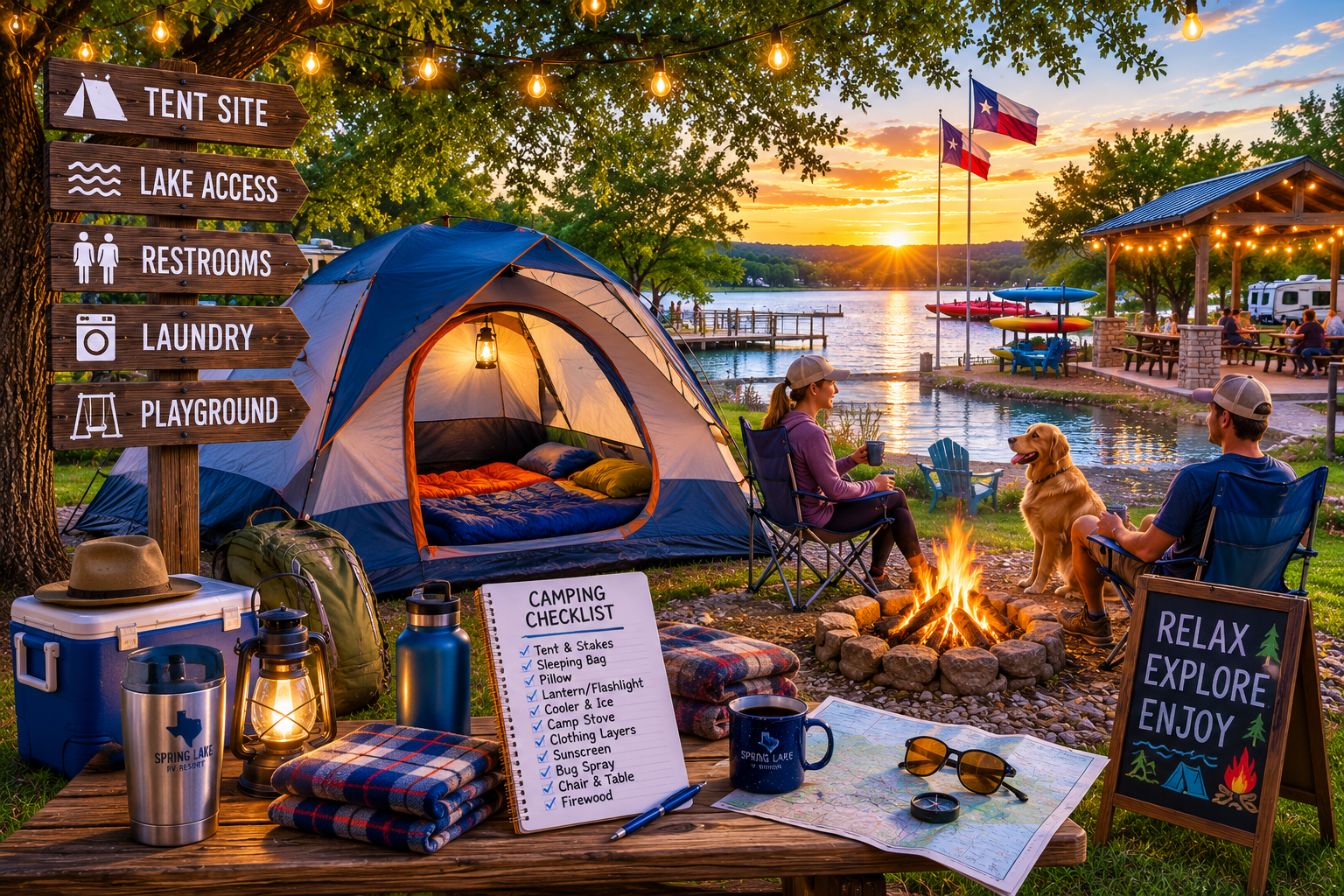
Not every camper rolls in with a 40-foot fifth wheel. Some of the best camping experiences at Spring Lake happen on the ground, under a tent, with the pond ten feet away and a sky full of Kansas stars above.
This guide covers what you need to know before you arrive with your tent: the site selection logic, the gear list that actually matters for Kansas camping, and what to do once you’re set up.
Why Tent Camping at an RV Park Works Better Than You Might Think
People who haven’t tried traditional camping at an RV park sometimes assume it’s an inferior experience — that the RV presence somehow diminishes the camping character of the site. In practice, the reverse is often true. RV parks that accommodate tent campers typically have better amenities than pure tent campgrounds: shower houses with hot water, laundry facilities, accessible restrooms with actual lighting, and the general infrastructure of a property that serves a paying guest community rather than just providing a flat spot to pitch.
At Spring Lake specifically, the combination of the lakeside environment and the park’s full amenity infrastructure gives tent campers access to an experience that primitive camping in a more remote area doesn’t offer. You’re sleeping outside. You’re hearing the lake at night. And you have a hot shower available in the morning. That’s a good deal.
“Tent camping next to water with facilities nearby is the combination that produces the memory. Not enduring — actually experiencing.”
Site Selection: Where to Set Up at Spring Lake
Site selection matters for tent campers more than for RV travelers, because you’re more affected by everything in your immediate environment: ground composition, shade, noise from neighbors, drainage if it rains. Taking a few minutes on arrival to walk the tent camping area before committing to a specific site is time well spent.
Water View vs. Interior Sites
If your priority is the lake experience — waking up to the sound of ducks, watching herons fish in the morning light, having the water visible from your tent door — request or choose a site as close to the lake or pond edge as the park’s tent area allows. The early morning light on the water, visible from a sleeping bag through an open tent fly, is one of those camping moments that’s worth the specific request when you book.
Interior sites are typically quieter in terms of wind — the Kansas plains can generate meaningful wind, particularly in spring and fall, and a site with some natural wind break has value. They’re also often shadier if the site is under tree cover, which matters in summer when afternoon heat builds.
Drainage is Critical
Kansas weather is unpredictable, and even a forecast that looks clear can change. Before pitching your tent, look at the ground and the surrounding grade. You want your tent on slightly elevated ground relative to the surrounding area — never in a low spot or a depression where water would collect if rain arrives. This is the most commonly skipped site evaluation step, and it’s the one that produces the miserable 3 a.m. experience of sleeping in a shallow puddle. Take 60 seconds, look at the topography, and put your tent where the water would run away from rather than toward your site.
Ground Composition
Kansas soil varies. Some sites will have firm, stake-friendly ground; others may have compact clay or rocky substrate. Test a stake before you commit to a site — if it doesn’t go in cleanly, try another location. Bringing extra-long stakes (12-inch stakes rather than the standard 8-inch) handles soft or inconsistent ground better and gives you more options for site placement without having to worry about stakes pulling out in wind.
What to Bring: The Gear List for Kansas Tent Camping
Kansas camping has specific conditions that make some gear choices more critical than standard camping lists suggest. Here’s the honest breakdown.
The Tent
Kansas wind is real. A three-season tent with a full-coverage rainfly and good stake point count is the minimum. Freestanding tents (ones that stand without stakes) give you the option to relocate quickly if you choose the wrong initial site. Avoid single-wall tents in summer — condensation in the humid Kansas nights will make the interior damp by morning. Mesh inner tents with a separate rainfly handle this much better.
Sleeping System
The sleeping temperature range at Spring Lake varies significantly by season. Summer nights rarely go below 65°F but are often humid. A lightweight sleeping bag or even just a liner in summer is sufficient. Fall and spring nights can drop into the 40s and occasionally lower — a bag rated to 30°F covers the range for shoulder season camping. A sleeping pad is non-optional regardless of season; insulation from the ground cold matters even in summer and the comfort difference between a good pad and bare ground is significant over a full night.
Kansas-Specific Additions
DEET insect repellent — Kansas mosquitoes are active from spring through early fall, and the lakeside environment at Spring Lake concentrates them near the water. A battery-powered fan for summer nights, which make the humidity manageable inside the tent. Extra tent stakes and guy lines for wind. A small tarp as a footprint under the tent and as a shelter for the gear area outside the tent.
For family tent camping near Wichita, packing an extra set of everything for each family member — an extra dry base layer, dry socks — covers the most common source of overnight camping misery: wet clothes that can’t dry before bedtime. These take almost no space and prevent the problem that makes families not want to go camping again.
What to Do Once You’re Set Up
The camping at Spring Lake isn’t just about the overnight — it’s about what you do with the environment you’re in. And the lake environment at this park is genuinely good for a few specific things.
Fishing from the bank is accessible to tent campers in the same way it is to RV guests — you’re on the same property, the same water, with the same access. Evening bank fishing for catfish or early morning bass and panfish are both viable from tent sites near the water. A Kansas fishing license (required for anglers 16 and older, available at sporting goods retailers and online through the Kansas Department of Wildlife and Parks) is necessary.
The bird life around the lake rewards early risers. Great blue herons are regular features of the Spring Lake morning; kingfishers are present when the water is calm and clear; various waterfowl visit seasonally. A pair of binoculars adds significantly to the early morning tent-door experience.
For days when you want to explore beyond the park, the Halstead area exploration guide covers what the surrounding town has to offer. The Wichita area guide gives you the full day-trip picture from a Spring Lake base. And if you’re coming from the Newton area or want to know what’s accessible from the eastern approach, the RV park near Newton gives you additional context.
For booking tent sites, the short-term stay options are the starting point. If you find yourself wanting to extend — which happens after a good first night at a waterside tent site — the long-term stay options are worth knowing about. And for the full picture of the park’s facilities and what makes it worth choosing, the park amenities page covers what’s available. Everything starts at Wichita RV Park.
Frequently Asked Questions
Does Spring Lake RV Resort have dedicated tent camping sites?
Spring Lake RV Resort accommodates tent campers alongside RV guests. Contact the park directly when booking to confirm tent site availability, site locations relative to the lake, and any specific tent camping policies such as vehicle parking near sites and access to park facilities. Specifying that you’re tent camping rather than arriving in an RV when you book helps the park assign an appropriate site rather than slotting you into a large vehicle hookup site that’s poorly suited to tent camping.
Is tent camping near Wichita actually a good experience?
Yes, with the right site and the right preparation. Spring Lake RV Resort’s lakeside setting makes it one of the better tent camping environments in south-central Kansas — the water, wildlife, and park infrastructure (shower houses, laundry, restrooms) give tent campers the traditional outdoor experience with the amenity access that makes multi-night stays comfortable. Kansas weather is the primary variable that requires preparation: insect repellent for spring and summer, wind-rated tent and stakes year-round, and awareness of temperature swings in shoulder seasons. Prepared tent campers consistently have better experiences here than unprepared ones who are surprised by conditions.
What is the best season for tent camping at Spring Lake?
Spring (April through May) and fall (September through October) offer the most consistently comfortable tent camping conditions at Spring Lake — mild temperatures, lower humidity than summer, and the particular quality of those shoulder seasons’ light and outdoor character. Summer tent camping is viable in the mornings and evenings but requires heat and insect management during midday. Winter tent camping is possible for prepared campers with appropriate gear but is niche — the park’s cabin option becomes more relevant for cold-season visitors who want the outdoor environment without the challenges of winter sleeping.
Can I fish from tent camping sites at Spring Lake?
Yes. Tent campers have the same property access as RV guests, including the lake and pond shoreline access for fishing. A valid Kansas fishing license is required for anglers age 16 and older — available online through the Kansas Department of Wildlife and Parks at ksoutdoors.com, through the KDWP mobile app, or at sporting goods retailers in the Wichita area. The Spring Lake water features hold bass, crappie, bluegill, and catfish. Evening bank fishing from sites near the water is one of the most consistently enjoyable camping activities at the park.
What do I do about Kansas wind when tent camping?
Kansas wind is one of the conditions that catches first-time campers in the state off guard. Practical mitigations: choose a site with natural wind break if available (tree cover, a slight ground depression, or a position that puts a natural feature between your site and the prevailing wind direction); stake all corners and guy lines fully rather than using the minimum staking; bring extra-long stakes (12-inch) for soft ground conditions; and know your tent’s wind rating — a cheap tent with a partial rainfly is genuinely inadequate in strong Kansas spring or fall winds. Most experienced Kansas campers also weight the inside of the tent (putting gear bags and a cooler inside) before sleeping as an additional anchor strategy in high-wind conditions.
Are there fire rings at the tent sites at Spring Lake?
Fire pit and fire ring availability at specific tent sites varies — this is worth confirming with the park when booking. Even if fire rings are available, Kansas campfires are subject to county burn ban regulations that can be implemented during dry conditions. Checking current Harvey County burn ban status before your trip (through the Kansas State Fire Marshal website) avoids arriving ready for a campfire that you can’t legally have. A propane camp stove is a practical backup for cooking regardless of fire ring availability and burn ban status.